

McDonald’s AI Hiring Tool Exposed Candidate Data
Small McDonald's Hiring Data Leak: AI Platform Vulnerability Patched

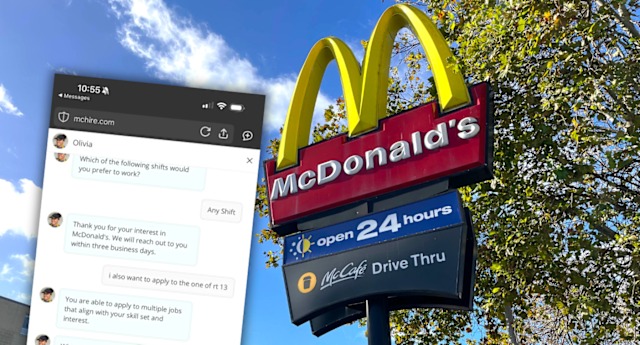
A glaring security vulnerability in McDonald’s AI-powered hiring system exposed candidate data through elementary flaws, revealing significant third-party risks in automated recruitment platforms. The fast-food giant’s “McHire” platform, powered by Paradox.ai’s “Olivia” chatbot, was compromised by security researchers who gained administrative access using the comically weak password “123456” and discovered additional critical API vulnerabilities.
Security researchers Ian Carroll and Sam Curry uncovered the flaws during a cursory security review prompted by Reddit complaints about Olivia’s “nonsensical answers” during applicant screenings. Within thirty minutes of investigation, they accessed Paradox’s administrative portal through a staff login link on McHire.com, entering “123456” for both username and password, a credential pair that immediately granted full administrative privileges. Carroll described the experience as “uniquely dystopian,” noting that after beginning a mock job application, they swiftly obtained “full access to virtually every application that’s ever been made to McDonald’s going back years”.
The Technical Vulnerabilities
The breach stemmed from two fundamental security failures. First, the exposed Paradox.ai administrator account, reportedly unused since 2019 but still active, relied on weak legacy credentials that violated current password standards. Second, researchers discovered an unauthenticated API endpoint vulnerable to Broken Object Level Authorization (BOLA), allowing them to retrieve applicant records by simply incrementing or decrementing ID numbers in the URL. This technique potentially exposed chat records numbering approximately 64 million, though only a fraction contained sensitive information.
Scope of Exposed Data
Paradox.ai confirmed the researchers accessed just seven chat records, five of which contained U.S.-based applicants’ personal information, including full names, email addresses, phone numbers, and IP addresses. Crucially, no Social Security numbers, financial data, or full job applications were compromised. The company emphasized that “at no point was candidate information leaked online or made publicly available” beyond the researchers’ ethical disclosure.
The 64 million figure referenced in initial reports represents total chat interaction records, not individual applicants or exposed profiles. Paradox clarified that “a chat record could be as simple as a user clicking a button on a chatbot without entering any personal information,” and likely included duplicate interactions.
Corporate Responses and Remediation
Upon disclosure on June 30, 2025, both organizations responded rapidly. Paradox.ai disabled the vulnerable test account within hours, revoked legacy credentials, patched the API endpoint, launched a bug bounty program, and established a security contact email (security@paradox.ai). Chief Legal Officer Stephanie King stated: “We do not take this matter lightly, even though it was resolved swiftly and effectively. We own this”.
McDonald’s response shifted responsibility to its vendor, expressing disappointment at “this unacceptable vulnerability from a third-party provider” while confirming remediation occurred the same day as reporting. The corporation pledged to “continue to hold our third-party providers accountable to meeting our standards of data protection”.
Security Implications and Expert Analysis
Security professionals universally condemned the lapse as a failure of fundamental cybersecurity hygiene. Randolph Barr, CISO at Cequence Security, noted: “What failed here wasn’t some complex AI vulnerability; it was foundational security. Weak default credentials, no MFA, broken access control, and exposed endpoints are issues that have been on OWASP’s radar for over a decade”. Aditi Gupta of Black Duck added that the incident demonstrates how “the rush to deploy new technology must not compromise basic security principles”.
The breach highlights critical vulnerabilities in the expanding AI recruitment sector, where chatbots handle sensitive applicant data with insufficient safeguards. Darren Guccione, CEO of Keeper Security, stressed that “AI systems handling sensitive personal data must be managed with security at the forefront, including robust credential management, enforcing least-privilege access, and continuous monitoring”.
Looking Ahead
While contained quickly, this incident serves as a cautionary tale for organizations deploying AI tools without adequate security oversight. Stephen Frethem of Varonis summarized the broader industry lesson: “These days, attackers aren’t breaking in, they’re logging in”. As automated hiring platforms proliferate, ensuring hardened credentials, secured APIs, and rigorous vendor management will be essential to protect job seekers entrusting their data to conversational interfaces like Olivia. The McHire breach ultimately underscores that no technological advancement negates the necessity of cybersecurity fundamentals, especially when handling millions of job applicants’ sensitive information.
Subscribe to my whatsapp channel

Comments are closed.