
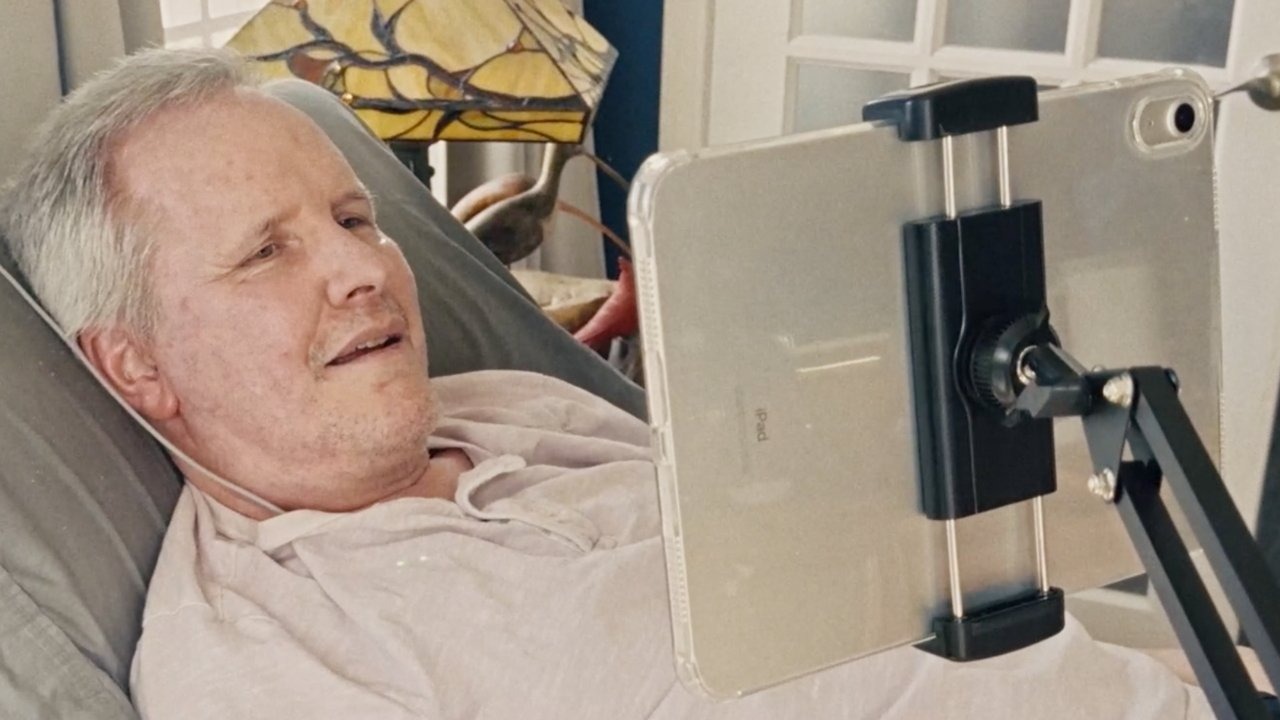
ALS Patient Controls iPad via Brain Implant
Apple’s Brain-Computer Interface Enables First Thought-Controlled iPad

New York, NY—In a milestone merging neuroscience with consumer technology, Mark Jackson, a 62-year-old living with advanced ALS (amyotrophic lateral sclerosis), has become the first person to publicly demonstrate native thought control of an Apple iPad. Using Synchron’s Stentrode brain implant and Apple’s newly released Brain-Computer Interface Human Interface Device (BCI HID) protocol, Jackson navigated apps, composed messages, and browsed the web entirely through neural signals, without physical movement, voice commands, or eye tracking.
The Breakthrough in Action
The video demonstration, released by neurotech firm Synchron, shows Jackson operating iPadOS 26 using only his intention to move a cursor. Apple’s accessibility framework, Switch Control, translates motor cortex signals detected by the Stentrode, a stent-like electrode array implanted via the jugular vein, into digital commands. The system leverages closed-loop feedback: the iPad shares real-time screen data with Synchron’s decoder, refining the accuracy of Jackson’s neural inputs. A novel “signal strength” meter (displayed as a blue-shaded box) provides immediate visual feedback, allowing him to adjust his focus for optimal control.
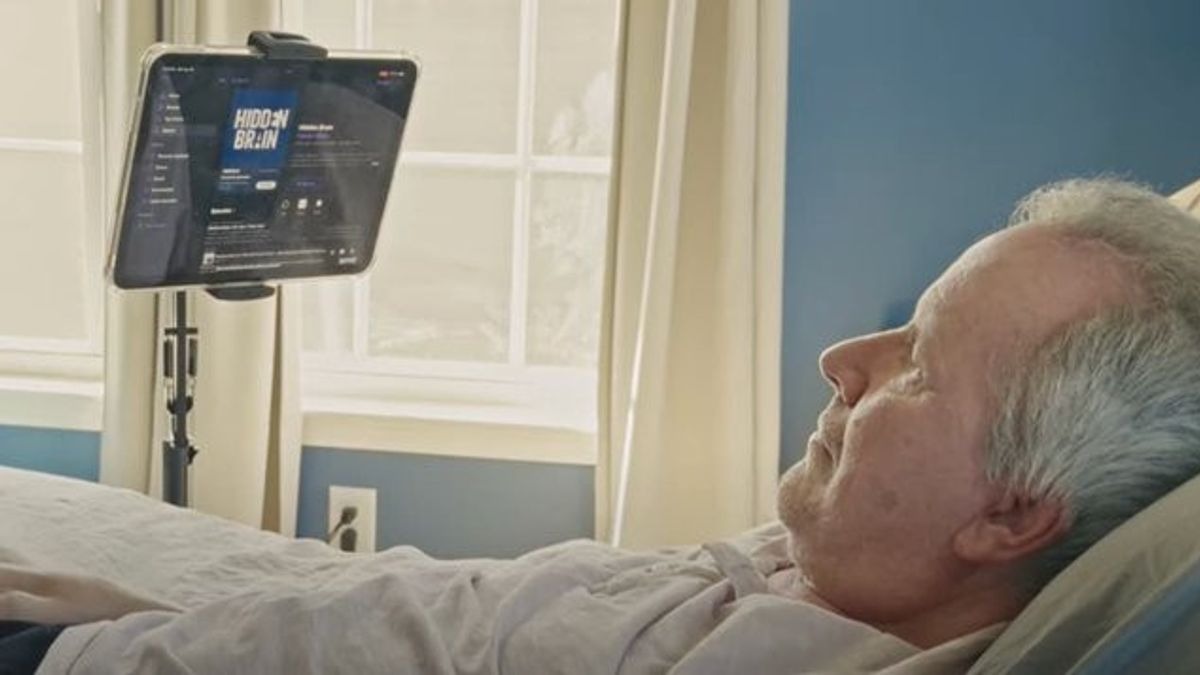
“When I lost the use of my hands, I thought I had lost my independence,” Jackson shared. “Now, with my iPad, I can message loved ones and stay connected with the world, just by thinking. It’s given me part of my life back”.
Engineering the Future
Unlike Neuralink’s N1 implant, which requires open-brain surgery, Synchron’s endovascular approach positions the Stentrode in a blood vessel near the motor cortex, avoiding major tissue disruption. The 30-minute procedure resembles standard stent placements, significantly reducing surgical risks. Apple’s BCI HID protocol, launched in May 2025, treats neural signals as native inputs, similar to keyboards or trackpads. This standardization allows any compliant BCI to interface with iPhones, iPads, and Apple Vision Pro.
Synchron CEO Dr. Tom Oxley called the demo “a glimpse into the future of human-computer interaction,” emphasizing its scalability. “Cognitive input is becoming a mainstream control mode,” he told PCMag. COO Kurt Haggstrom highlighted the signal-strength feature’s role in patient autonomy: “Users learn to self-optimize refocusing attention or adjusting posture without clinician intervention”.
While currently available only to 10 clinical trial participants (under FDA investigational exemption), Synchron plans broader releases pending regulatory approval. The technology remains focused on assistive applications for now, particularly for paralysis patients. Still, its integration into Apple’s ecosystem hints at wider eventual adoption.
Ethical questions linger. Nolan Arbaugh, Neuralink’s first human implantee, recently emphasized that neural data represents “your personality” and requires stringent ownership safeguards. Legal scholar Daryl Lim of Penn State urged multi-agency oversight to address privacy and cognitive liberty.
A New Chapter in Accessibility
For millions with motor impairments globally, Synchron’s progress signals a paradigm shift. As neurotech evolves from labs into living rooms, its success hinges not just on engineering, but on preserving what Jackson calls the “independence” technology can restore one thought at a time.
Subscribe to my whatsapp channel

Comments are closed.