
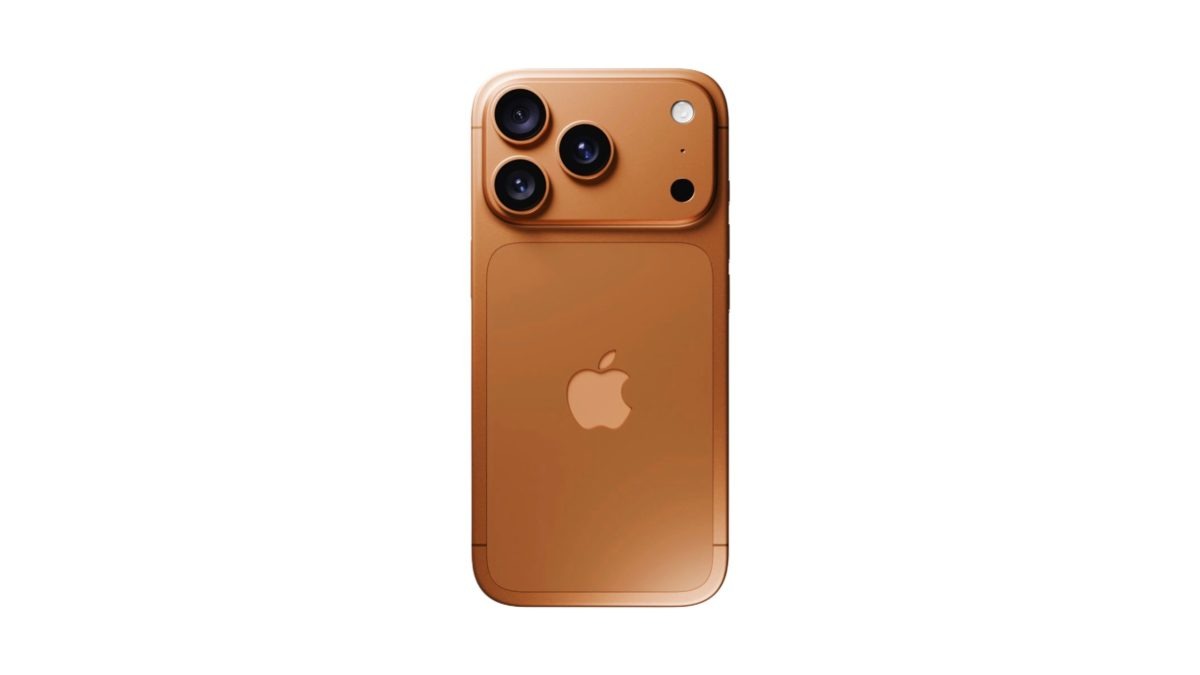

August 12, 2025 — A counterfeit iPhone 17 Pro running Android has surfaced online, featuring a near-identical replica of Apple’s unreleased iOS 26 interface and its “Liquid Glass” redesign. The clone, which mimics the iPhone 17 Pro’s rumored elongated camera bar and orange color option, underscores escalating risks to Apple’s intellectual property months before the official launch.
The Clone’s Deception
Images and videos of the knockoff device, leaked by industry watchdog Copycat Tech, reveal a sophisticated imitation. The Android-based OS replicates iOS 26’s translucent “Liquid Glass” aesthetics, including refractive interface elements, floating tab bars, and spatial Lock Screen effects. Even unreleased features like the Camera app’s simplified controls and Messages’ polling tool appear cloned. The device’s hardware apes Apple’s leaked design, including a full-width rear camera bar and rumored copper-orange finish.
Ben Wood, Chief Analyst at CCS Insight, notes: “This isn’t just skin-deep mimicry. These manufacturers dissect leaks to engineer hardware and software clones in record time. Consumers risk buying outdated hardware with malware vulnerabilities.”
iOS 26: A Blueprint for Counterfeiters
Apple’s iOS 26, unveiled at WWDC 2025, marks the platform’s largest visual overhaul since iOS 7. Its Liquid Glass design uses real-time rendering to create dynamic, translucent interfaces that refract light and adapt to content. Key elements like the Lock Screen clock’s “3D floating” effect and collapsing Safari navigation bars were detailed in developer betas, giving counterfeiters a roadmap.
“Liquid Glass’s transparency effects are computationally intensive. This knockoff likely uses basic filters, but the average buyer wouldn’t notice,” says Lisa Chen, a UI developer at Stanford.
The Accelerating Clone Cycle
Historically, iPhone clones emerged after launch. Now, leaks about Apple’s September 9 launch event, including specs like the A19 Pro chip, 48MP telephoto camera, and anti-reflective display, enable preemptive counterfeiting. Tariff-related price hikes (expected to push the Pro model to $1,049) could make these $200–$300 clones appealing to unwary shoppers.
Tim Millet, Apple’s VP of Platform Architecture, recently emphasized security in an interview: “When hardware and software are decoupled, users lose protections like on-device processing and end-to-end encryption.”
Apple’s Looming Challenge
With the iPhone 17 Pro’s design widely circulated, Apple faces dual challenges: safeguarding its launch and mitigating consumer confusion. Leaked dummy units and Pantone color codes (e.g., “Papaya” orange) simplify replication. Though Apple’s modem transition to its in-house C2 chip next year may complicate radio compliance, current clones use generic Qualcomm alternatives.
As Wood warns, “These devices fund organized crime. Buyers sacrifice security updates, performance, and often their data.”
The premature emergence of this clone signals a new front in tech counterfeiting. With Apple’s September 9 event weeks away, consumers should scrutinize “early” iPhones. As iOS 26’s Liquid Glass redefines Apple’s design language, its very innovation has become a counterfeit blueprint.
Subscribe to my whatsapp channel

Comments are closed.