
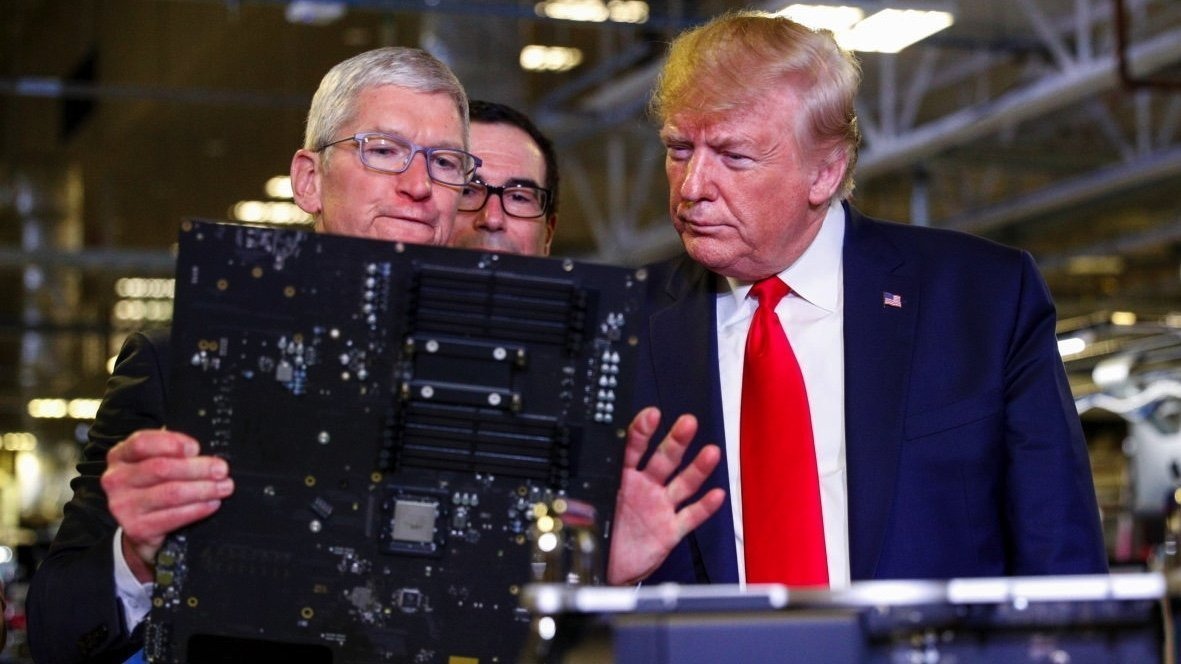
How Tim Cook Won Trump’s Tariff Exemption for Apple
Apple Stock Surges 13% on $100B U.S. Investment Pact, Trump Tariff Exemption

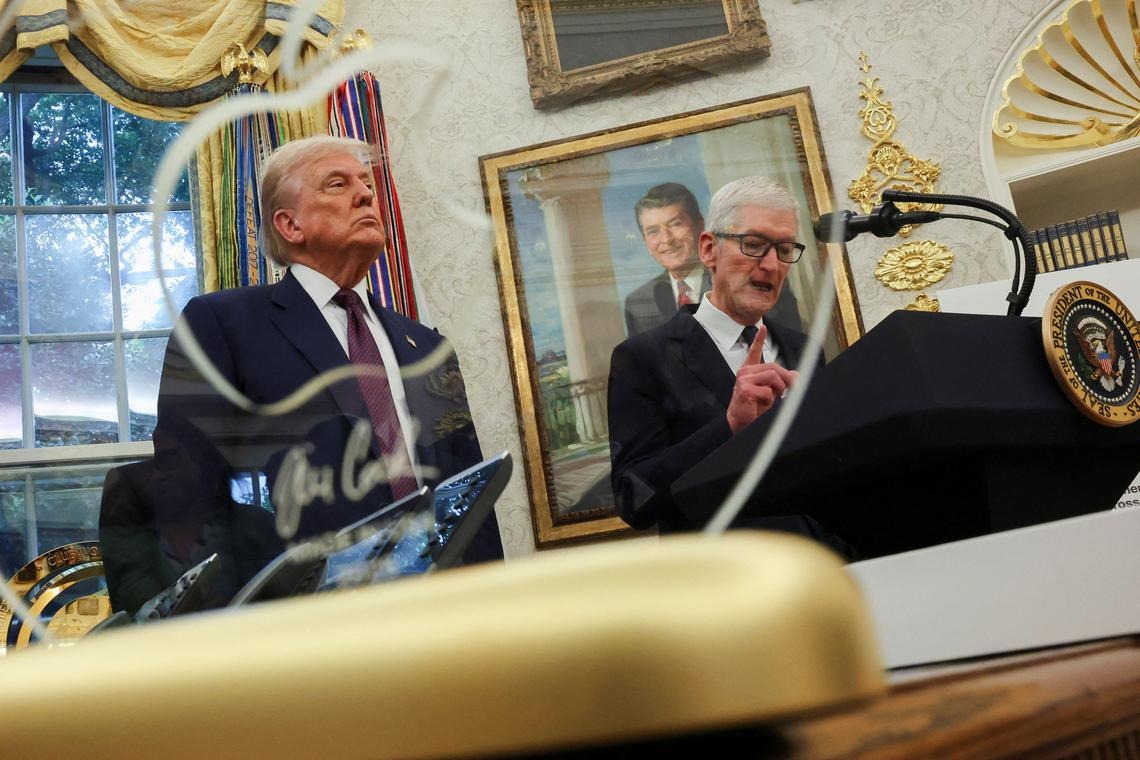
Apple shares rocketed 13% this week, their steepest weekly climb since July 2020, after CEO Tim Cook secured a critical tariff exemption from President Donald Trump during an Oval Office meeting. The rally added over $400 billion to Apple’s market capitalization, propelling it past $3.4 trillion and cementing its position as the world’s third-most-valuable company behind Nvidia and Microsoft.
The surge followed Cook’s August 6 announcement that Apple would invest an additional $100 billion in U.S. suppliers and manufacturing over four years, raising its total domestic commitment to $600 billion. President Trump simultaneously declared Apple exempt from looming 100% tariffs on imported semiconductors, which analysts warned could have doubled chip costs. The exemption averts an estimated $1.1 billion in quarterly tariff costs Apple had projected.
Strategic Partnerships Anchor “American Manufacturing Program”
Central to Apple’s pledge is its newly launched American Manufacturing Program (AMP), designed to expand domestic production of critical iPhone components. The initiative deepens collaborations with 10 U.S.-based suppliers:
-
Corning ($2.5 billion investment) will manufacture all iPhone and Apple Watch glass in Kentucky.
-
Texas Instruments and Samsung will produce advanced semiconductors in Texas and Utah plants.
-
TSMC’s Arizona fab will supply chips, with Apple as its “first and largest customer.
-
GlobalWafers America, Applied Materials, and Amkor will establish a full U.S. silicon supply chain—from wafer production to chip packaging.
These partners will collectively produce 19 billion chips for Apple in 2025 alone. Though assembly remains overseas, Cook emphasized that U.S.-made components like Kentucky-milled glass and Texas-built Face ID lasers now feature in devices globally.
A Political and Financial Masterstroke
The deal cleverly addresses Trump’s long-standing demand for U.S. manufacturing while preserving Apple’s cost-efficient supply chain. Trump had previously threatened 25% tariffs on iPhones made overseas, criticizing Apple’s production shift to India. Wednesday’s accord alleviated investor fears of a protracted trade war.
“CEOs realize giving the president something to brag about without destroying their company makes the problem go away,” said Babson College professor Peter Cohan. Nancy Tengler, CEO of Laffer Tengler Investments (an Apple shareholder), called the announcement “a savvy solution” to Trump’s demands, noting Cook delivered “symbolic headlines” without economically unviable concessions like full iPhone assembly relocation.
Sustainability Questions Linger
Despite the market’s euphoria, analysts cautioned that Apple’s $150 billion annual U.S. spending aligns with existing trends. Its 2018–2023 commitments averaged $86 billion yearly, and partners like Corning already supplied Apple. Morgan Stanley noted Corning’s $2 billion glass business won’t see revenue bumps from the deal.
Still, the pact strengthens Apple’s insulation against global supply shocks. As Wedbush’s Dan Ives observed, the cost is marginal against Apple’s $275 billion annual global expenditures but delivers “a masterclass in managing uncertainty”.
With tariffs sidestepped and AI-driven iPhone upgrades looming, Apple’s record week signals renewed investor confidence. As J.P. Morgan’s Samik Chatterjee summarized: “After months of overhang from potential tariff challenges, this strategic alignment with U.S. priorities is a game-changer”. The question now is whether component localization can fuel the innovation needed to reclaim its top market position.
Subscribe to my whatsapp channel

Comments are closed.