
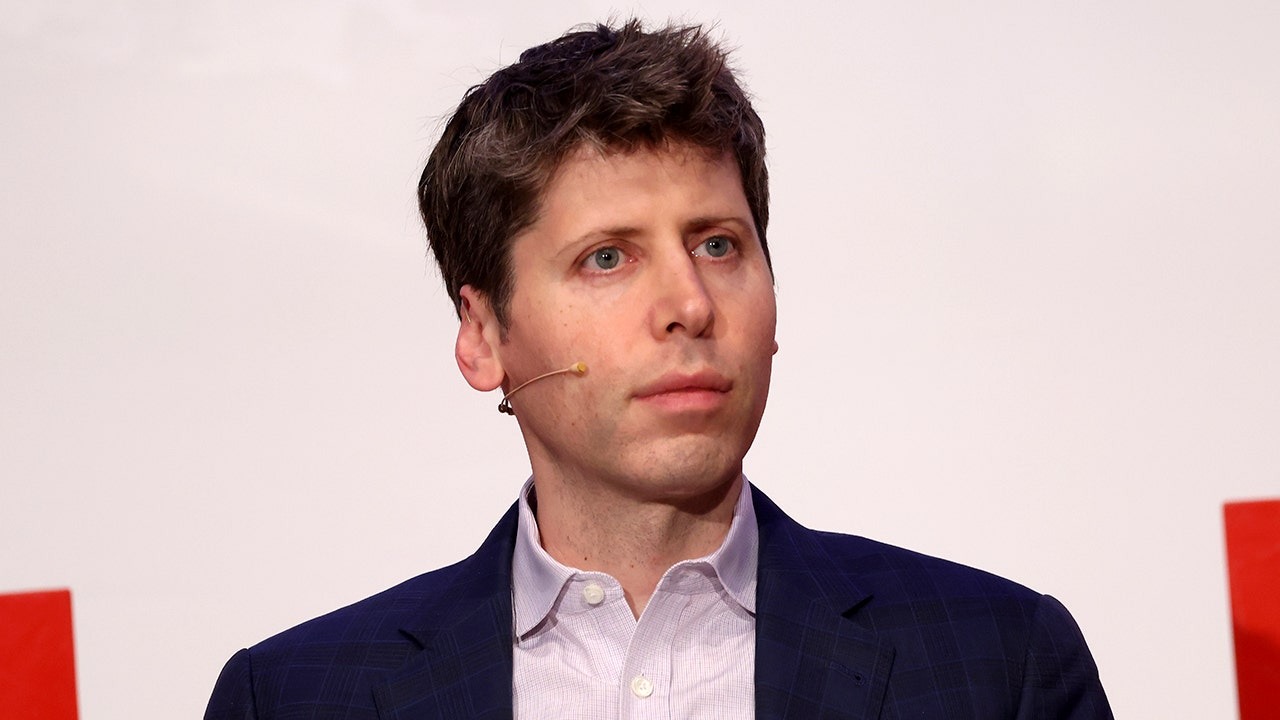
Sam Altman’s Urgent Warning: AI Deepfakes Could Trigger Global Fraud Epidemic
OpenAI Chief Warns AI Scams Will Overwhelm Banks, Backs Biometric Shield

OpenAI CEO Sam Altman delivered a stark warning this week that artificial intelligence could trigger a global “fraud crisis” within months, citing AI’s ability to shatter traditional authentication systems and supercharge impersonation scams. Speaking at a Federal Reserve conference on July 22, Altman revealed that sophisticated voice and video deepfakes already used to trick parents with fake kidnappings and mimic U.S. Secretary of State Marco Rubio have rendered most security measures obsolete except passwords.
“AI has fully defeated most authentication methods,” Altman told financial leaders, highlighting that some institutions still accept voice prints to authorize large transactions, a practice he called “crazy.” He predicted AI-generated video scams indistinguishable from reality will emerge “very, very soon,” escalating risks beyond the FBI-documented voice-cloning attacks that cost victims thousands.
The Orb: A “Proof of Humanity” Shield
As a countermeasure, Altman champions the Orb, an iris-scanning device developed by Tools for Humanity, his 2019 co-founded venture. The beach-ball-sized sphere maps users’ irises into a unique 12,800-digit “iris code,” issuing a “World ID” that serves as a biometric passport for online interactions. Verified users receive ~$42 in Worldcoin cryptocurrency, incentivizing adoption. The goal: create a global “human verification layer” before AI agents dominate digital spaces.
Despite deploying 7,500 Orbs across U.S. gas stations and stores this year, uptake lags only 12 million verified humansexistingt since mid-2023, well below the 50 million target for 2025. Critics cite privacy concerns (Hong Kong banned Orbs) and limited real-world utility. During testing, CNN’s reporter was rejected for wearing blue-light contacts, highlighting reliability gaps.
Regulatory Reversal: From Safeguards to Speed
Altman’s fraud warnings coincide with a stark reversal in his regulatory stance. At a May Senate hearing, he opposed licensing regimes for AI, calling them “disastrous” for U.S. competitiveness, despite advocating exactly that in 2023. This pivot mirrors the Trump administration’s deregulatory push, including repealing Biden-era AI safety rules and chip export limits. Vice President JD Vance recently declared, “The AI future won’t be won by hand-wringing about safety”.
OpenAI has ramped up Washington lobbying, opening a D.C. office and contributing to the imminent White House “AI Action Plan.” While urging safeguards against superintelligent AI “going rogue,” Altman now prioritizes outpacing China: “It’s hard to say how far ahead we are, but not a huge amount of time,” he told Senator Ted Cruz.
Superintelligence and Economic Disruption
Beyond fraud, Altman fears uncontrolled superintelligence could enable bioweapons or grid attacks if developed irresponsibly. Yet he downplays near-term job loss, insisting “no one knows” AI’s economic impact despite peers like Anthropic’s CEO forecasting displacement. His vision: a future where jobs become optional “status games,” supported by systems like Worldcoin for universal basic income distribution.
Security analyst Elena Torres notes the tension: “Authentication overhaul is urgent, but swapping today’s risks for biometric dependency demands scrutiny.” As Tools for Humanity CEO Alex Blania concedes, failure could leave the internet unrecognizable: “The internet will change drastically in 12–24 months. We have to succeed, or I’m not sure what else would happen”.
Subscribe to my whatsapp channel
