
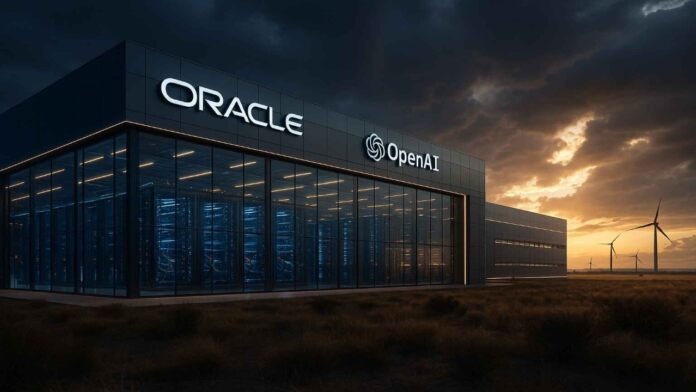

OpenAI has confirmed it is the company behind Oracle’s landmark $30 billion-per-year cloud infrastructure deal, cementing a partnership critical to powering its next-generation artificial intelligence systems. The agreement, part of the ambitious Stargate initiative, will see Oracle develop 4.5 gigawatts of new data center capacity across the United States, equivalent to the output of two Hoover Dams, to support OpenAI’s escalating computational demands.
The Stargate Infrastructure Surge
The deal expands the $500 billion Stargate project unveiled at the White House in January 2025 by OpenAI, Oracle, and Japanese technology investor SoftBank. President Donald Trump championed the initiative as foundational to U.S. leadership in the global AI race amid growing competition with China. Stargate aims to deploy 10 gigawatts of AI-optimized data centers nationally, with the newly announced capacity bringing active development to over 5 gigawatts.
Construction is already underway at the Stargate I facility in Abilene, Texas, where Oracle began delivering Nvidia’s cutting-edge GB200 AI accelerator racks in June. OpenAI confirmed parts of the Texas site are operational, running early AI training workloads. Additional locations under consideration include Michigan, Wisconsin, New Mexico, Wyoming, and Ohio.
Financial and Operational Scale
The sheer magnitude of the commitment strains conventional benchmarks:
OpenAI’s $30 billion annual expenditure with Oracle triples its current $10 billion in annual recurring revenue.
Oracle spent $21.2 billion on capital expenditures in fiscal 2025 and expects to spend $25 billion in 20,26, totaling nearly $50 billion to support existing clients and requirements.
Evercore ISI analyst Kirk Materne estimates Oracle will need an additional $40 billion in capex through 2028 to meet its obligations, likely requiring debt financing.
The Abilene campus alone will eventually house 400,000 Nvidia GPUs, representing a $40 billion hardware investment. Across all sites, Stargate infrastructure will operate over 2 million AI chips.
Strategic Shifts and Challenges
Despite the announcement’s bullish tone, the project faces headwinds. The Wall Street Journal reported Stargate has “struggled to get off the ground,” with OpenAI and SoftBank disagreeing on key elements. Near-term plans have been scaled back, with a smaller Ohio-based facility now targeted for late 2025. Tesla CEO Elon Musk publicly questioned the consortium’s funding capacity, stating, “They don’y have the money”.
Oracle’s stock dipped 2% following the news, reflecting investor concerns about execution risks and capital intensity. However, shares remain up 46% year-to-date, buoyed by optimism around Oracle’s cloud infrastructure (OCI) growth.

Industry Implications
The partnership signals OpenAI’s strategic diversification beyond Microsoft Azure, though Microsoft remains a key cloud provider. OpenAI also uses infrastructure from CoreWeave and Google, including Google’s custom Tensor Processing Units (TPUs).
“This is Oracle’s breakout moment,” noted an industry analyst cited by Capacity Media. “It’s gone from enterprise laggard to an AI infrastructure powerhouse almost overnight”. Oracle CTO Larry Ellison has boldly declared that the company intends to build and operate more data centers than Amazon and Microsoft combined.
OpenAI emphasized Stargate’s economic impact, projecting over 100,000 U.S. jobs in construction, operations, and manufacturing. The Texas site has already created thousands of positions for electricians, technicians, and equipment operators.
Subscribe to my whatsapp channel

Comments are closed.