
TikTok’s “Out of Phone” Program Expands Reach to Taxis, Malls, and Everyday Screens
Beyond Phones: How TikTok Invades Billboards, Airports and Your Daily Commute

TikTok is accelerating its push beyond smartphones, significantly expanding its innovative “Out of Phone” advertising initiative to place viral content and campaigns onto physical screens in shopping malls, taxis, gyms, airports, water stations, and local businesses nationwide. The move marks a strategic shift to transform TikTok from a mobile-only platform into a ubiquitous presence across daily life, blending digital engagement with real-world visibility.
The program, first launched in 2023, initially targeted billboards, cinemas, and restaurants. Now, TikTok has partnered with four new out-of-home (OOH) networks: Curb (taxi-based entertainment), Westfield Malls (shopping centers), Rockbot (retail locations, gyms, cafes), and Hope Hydration (water refilling stations in high-traffic areas). This expansion adds thousands of screens across fitness centers, airports, urban panels, and small businesses, enabling creators and brands to reach consumers far beyond the app’s algorithmic feed.
How “Out of Phone” Operates
“Out of Phone” functions through three core channels, each tailored to distinct environments:
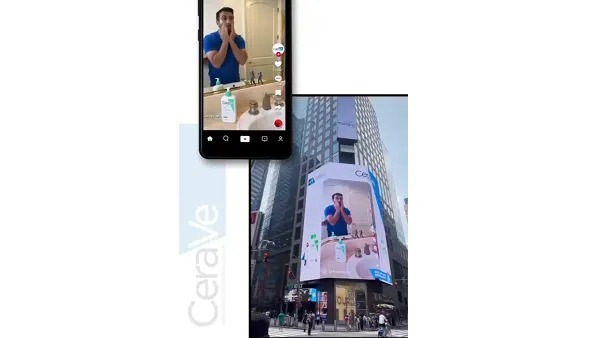
Billboard: Amplifies existing TikTok campaigns onto large-scale urban displays. Skincare brand CeraVe notably extended its #CleanseLikeaDerm campaign to Times Square billboards, merging user-generated content (UGC) with high-impact visibility.
Cinema: Recreates TikTok’s vertical video experience during pre-show screenings, leveraging captive audiences.
Other Screens: A flexible category covering taxis, malls, water stations, and more, all programmed to deliver contextually relevant content. For example, airport screens via ReachTV or gas station networks via GSTV.
Advertisers activate campaigns through TikTok’s Ads Manager, developing cross-platform media plans that launch on TikTok and extend to physical screens. Early tests show this dual approach boosts brand recall by merging TikTok’s “lean-in” interactive content with OOH’s “in-your-face” scale.
Why Advertisers Are Betting on Real-World Extensions
Industry experts highlight three strategic advantages:
-
Extended Audience Reach: OOH advertising captures demographics less active on TikTok, such as older consumers or commuters, while reinforcing digital campaigns in physical spaces. As Jeslyn Tan, Managing Director of Stellar Ace, notes, “OOH is here to stay and growing. This creates an omnichannel experience essential for modern brands”.
-
Elevated Influencer Impact: Creators traditionally confined to phone screens now feature on billboards and mall displays, enhancing their credibility. This aligns with trends like Zara’s shift toward UGC in advertising, emphasizing authenticity.
-
Data-Synergy Potential: Though still evolving, TikTok’s integration offers unique measurement opportunities. Patrick Ong, Head of Business at We Interactive, observes, “Static OOH now borrows TikTok’s engagement power. Conversely, TikTok accesses audiences untapped by social media”.
Challenges in Measurement and Saturation
Despite enthusiasm, hurdles persist. Unlike TikTok’s granular analytics, OOH success relies on foot traffic estimates and indirect metrics—a gap TikTok must bridge to attract performance-focused brands 11. Privacy concerns also loom as ads penetrate intimate spaces like taxis and doctors’ offices. Additionally, critics warn that over-saturation could dilute TikTok-style content’s novelty if deployed indiscriminately.
TikTok’s Broader Advertising Ambitions
“Out of Phone” anchors a larger strategy to diversify TikTok’s ad ecosystem. Recent launches include:
Symphony Avatars: AI-generated brand spokespeople for scalable multilingual campaigns.
TikTok Shop Image Search: Visual product discovery akin to Google Lens.
Deals for You Days: A Prime Day competitor leveraging creator livestream.
As Dan Page, TikTok’s Global Head of Distribution, asserts, “We’re taking TikTok beyond the palm of our hands and into everyday life”. With 71% of marketers increasing OOH budgets in 2024 (per Mediaocean), this expansion positions TikTok at the convergence of digital and physical brand building.
The Future of Advertising: Blurred Realities
TikTok’s OOH push signals a broader recalibration in advertising. No longer siloed as “digital” or “traditional,” campaigns now weave through both realms. TikTok videos ignite trends online, while billboards and taxi screens cement them offline. For small businesses, initiatives like TikTok’s SOAR Together program further democratize access to these hybrid tools.
As screens multiply in waiting rooms, transit hubs, and stores, TikTok’s vision is clear: to make scrolling inseparable from seeing.
Subscribe to my whatsapp channel

Comments are closed.