
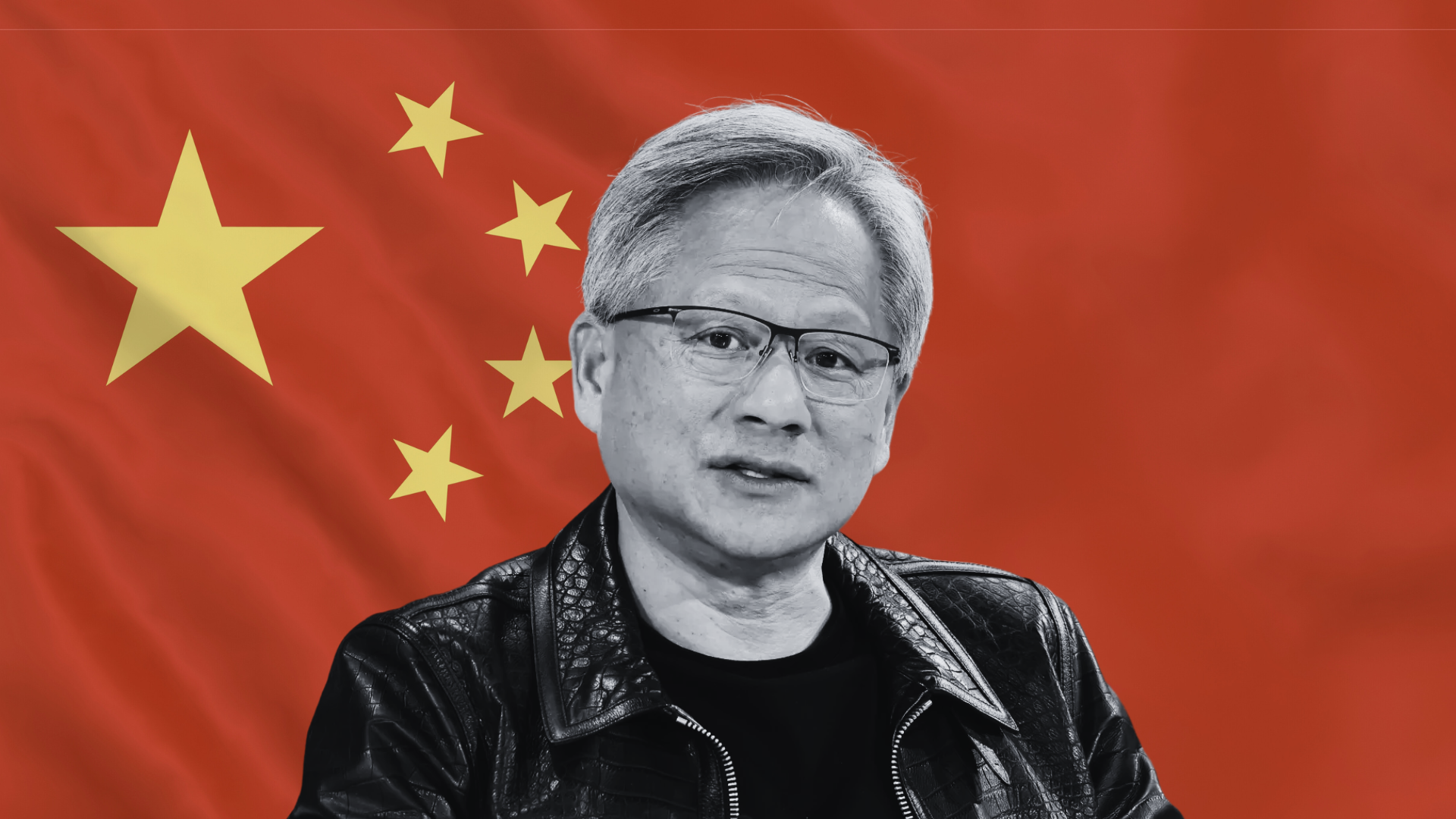
Nvidia Says Its China AI Market Share Fell to 0% — And the Warning Is Bigger Than It Sounds
Jensen Huang says export restrictions didn’t just block sales. They may have accelerated a rival ecosystem.

Two years ago, Nvidia was the name behind China’s AI boom.
Now its CEO says the company’s share of China’s AI accelerator market has fallen to 0%.
That number is startling on its own. But it may point to something bigger than one company losing business.
Speaking publicly, Nvidia CEO Jensen Huang said the U.S. made a strategic mistake by stepping away from one of the world’s largest technology markets. And according to him, the cost may not stop at lost chip sales.
Because markets do not stay empty for long.
The space Nvidia left behind
China has been one of the most important growth regions for advanced computing, cloud infrastructure, and AI deployment.
When access to Nvidia’s top hardware became limited through export controls, demand didn’t disappear. It shifted.
That’s where things change.
Instead of relying on foreign suppliers, Chinese companies now have stronger incentives to build domestic alternatives. Those alternatives may not have matched Nvidia immediately, but pressure often speeds up progress.
And once ecosystems form — software tools, supply chains, developer habits, enterprise contracts — they can become sticky.
Huang’s warning goes beyond Nvidia
Huang’s comments were notable because he didn’t frame China as a weak player held back by restrictions.
He described it as a serious competitor with top engineering talent, deep resources, and the determination to keep advancing AI regardless of obstacles.
That matters.
The common assumption has been that limiting access to premium chips slows competitors. It may in the short term. But Huang appears to be warning that long-term outcomes could look very different.
If restrictions motivate faster local innovation, the gap could narrow over time.
A new kind of AI race
The global AI battle is no longer just about who has the best chips today.
It is increasingly about who controls manufacturing networks, software platforms, research talent, and national-scale deployment.
China already has the users, the capital, and the urgency.
But here’s the part that stands out: once customers adapt to local hardware, some may never return to foreign vendors — even if restrictions ease later.
That would reshape the market permanently.
Why this matters beyond Nvidia
For investors, it signals how geopolitics can rapidly redraw billion-dollar industries.
For governments, it raises a difficult question: do restrictions slow rivals, or help them become independent faster?
And for the tech world, it shows something simple but powerful.
When one door closes, innovation usually looks for another entrance.
Nvidia may have lost share in China. But the larger story is who gains from that loss next.
Subscribe to my whatsapp channel
