Apple Ramps Up AI Investments and Acquisitions in Strategic Pivot
Apple Opens War Chest: AI Investments and Acquisitions Accelerate

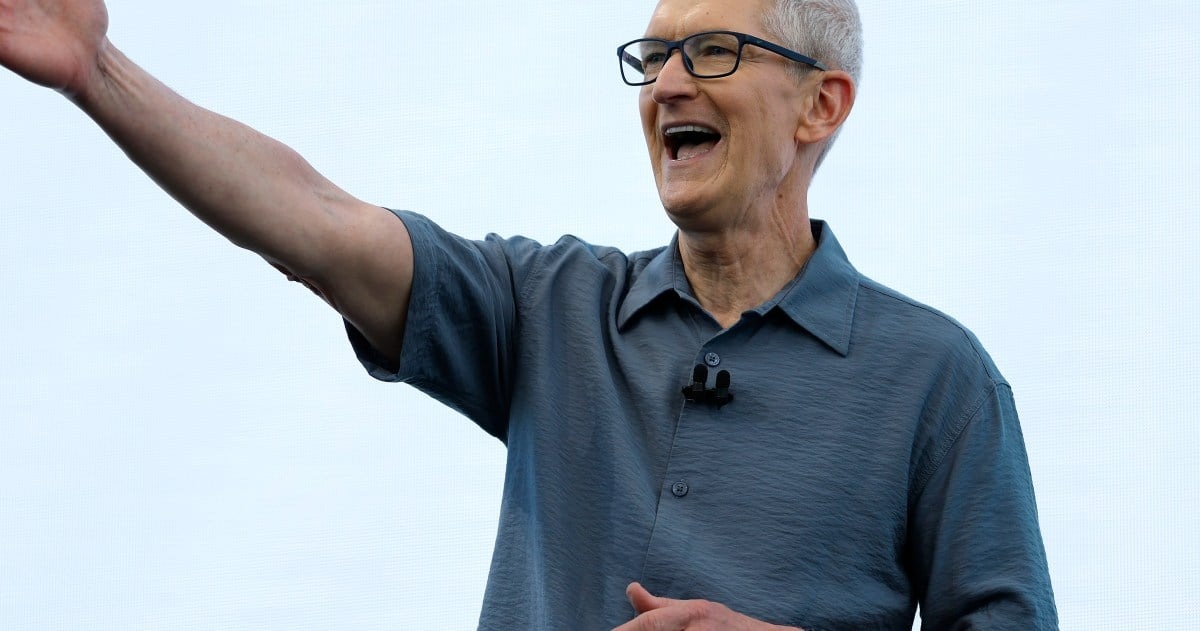
CUPERTINO, Calif. — In a decisive shift toward artificial intelligence, Apple CEO Tim Cook announced the company is “significantly growing” investments and reallocating internal talent to accelerate its AI ambitions. The move signals Apple’s intensified effort to close the gap with rivals like Google, Microsoft, and Meta, which have dominated the AI landscape with massive infrastructure spending and rapid feature deployment.
Strategic Reallocation and M&A Surge
On Apple’s Q3 2025 earnings call, Cook revealed the company is embedding AI “across devices, platforms, and the entire organization,” calling it “one of the most profound technologies of our lifetime.” A “fair number” of employees are being redirected to AI projects, underscoring internal prioritization. Simultaneously, Apple is aggressively pursuing acquisitions, having bought seven companies this year alone, roughly one every few weeks. While most were small, Cook emphasized openness to deals of any size that “accelerate our roadmap”.
Capital expenditures hit $3.46 billion in the June quarter, Apple’s highest since late 20,22, driven partly by AI infrastructure. Yet this pales next to competitors: Google plans $85 billion in 2025 capex, Meta up to $72 billion, and Microsoft $30 billion this quarter. Apple CFO Kevan Parekh noted a “hybrid model” using partners for cloud capacity keeps spending from growing “exponentially”.
Feature Rollout and Delays
Apple has launched over 20 AI features, including visual intelligence tools, photo cleanup, and writing aids. Upcoming additions like Live Translation and an AI-powered “Workout Buddy” for Apple Watch are slated for late 2025. However, its marquee upgrade to a deeply personalized Siri is delayed until 2026. Cook acknowledged “good progress,” but the setback follows criticism that Apple showcased an “unready” Siri prototype earlier this year.
Notably, Apple’s approach emphasizes privacy and on-device processing. Its “Private Cloud Compute” servers, manufactured in a new Houston facility, use custom Apple silicon to ensure data security. This aligns with Cook’s vision of “deeply personal, private, and seamlessly integrated” AI.
Hardware Strategy and Competitive Threats
Cook dismissed speculation that AI could diminish the iPhone’s relevance, calling it “difficult to see a world where iPhones are not living in it.” He positioned future AI devices as “complementary, not substitutions,” countering Meta CEO Mark Zuckerberg’s claim that glasses will become primary AI interfaces.
Still, Apple faces pressure. Executives like services chief Eddy Cue have conceded AI could disrupt the iPhone within a decade. Competitors are advancing swiftly: OpenAI acquired design firm io (led by ex-Apple designer Jony Ive) to build AI hardware, while Google and Meta are rolling out smartglasses.
The Path Forward
Analysts urge bold moves. Wedbush’s Daniel Ives called the next 12 months “critical,” suggesting Apple may need larger AI acquisitions to accelerate progress. Perplexity AI, valued at $18 billion, has been rumored as a target, which would dwarf Apple’s record $3 billion Beats deal. Gene Munster of Deepwater Asset Management advocates buying Anthropic ($61.5 billion valuation) to bolster Apple’s foundational models.
Apple’s $133 billion cash reserves make such deals feasible, though regulatory scrutiny looms. For now, Cook’s strategy blends internal development, targeted acquisitions, and partnerships as a measured but escalating counteroffensive in the AI arms race.
Subscribe to my whatsapp channel

Comments are closed.