
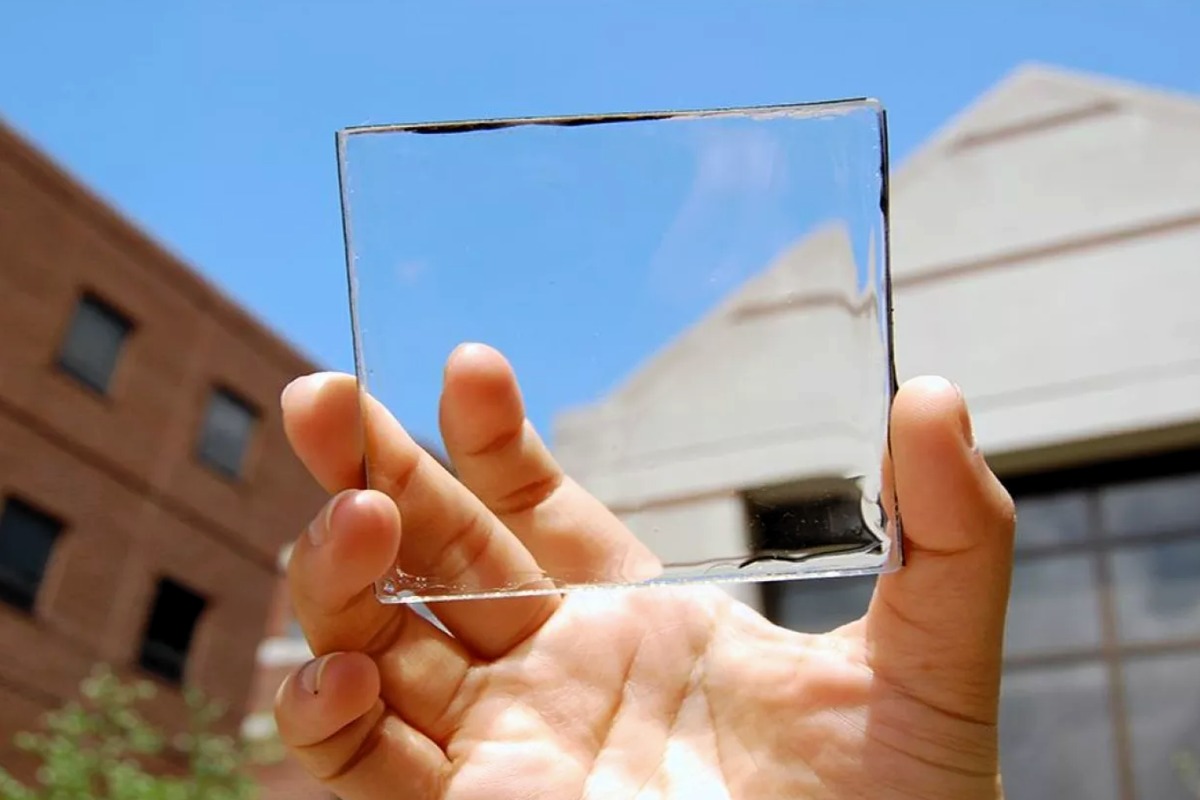

What if the glass in your home or office didn’t just let in daylight, but quietly generated electricity? That’s the promise of transparent solar panels, better known as solar windows, an innovation that turns one of the most ordinary building materials into an energy source.
From Lab to Lobby: How It Works
Two innovators, UbiQD and Ubiquitous Energy, are leading the charge. UbiQD’s solution, dubbed Wendow, sandwiches a layer of quantum dots between glass panels. These nanocrystals soak up ultraviolet and infrared light, then redirect a glow toward the edges where solar cells convert it all into power. Efficiency? About 5 percent at 50 percent transparency, roughly 50 watts per square meter in direct sunlight.
On the other side, Ubiquitous Energy’s UE Power™ acts like a smart coating painted on glass. It’s engineered to filter invisible UV and IR bands while staying crystal-clear, so buildings look the same but with electricity-generating windows.
Tiny Gains, Big Promise
Yes, solar windows lag behind rooftop panels in efficiency. But their real strength isn’t in beating rooftops, it’s in covering vast areas of glass already present in urban skylines. A skyscraper’s curtain wall could suddenly become a vertical solar farm.
As one analyst put it, “We’re not talking watt-by-watt competition with rooftops, it’s expansion of the solar footprint.” That expansion is exactly what cities hungry for clean energy need.
Progress, Hurdles, and Market Trajectory
These aren’t just lab experiments anymore. UbiQD recently secured a long-term supply deal with First Solar, aiming to roll quantum dots into bifacial thin-film panels by 2026. The company is even planning a high-volume quantum dot facility in the U.S.
Meanwhile, market forecasters see the transparent solar sector ballooning from around USD 17 million in 2024 to over USD 100 million by 2034, growing nearly 20 percent a year. Europe, with its strict green-building mandates, already leads adoption.
But hurdles remain. Wiring, inverters, and building codes complicate installation. Durability is another sticking point: windows need to last decades, yet most solar coatings haven’t proven that kind of lifespan. As one industry watcher noted, “Efficiency is modest but the transformational scale is real.”
Buildings account for nearly 40 percent of global carbon emissions. Rooftop panels help, but there’s only so much roof to go around. Walls, atriums, and floor-to-ceiling glass represent massive untapped potential. Solar windows don’t demand extra space, and they don’t alter aesthetics; they simply add functionality to what’s already there.
The idea of glass that doubles as a power source is moving from prototype to practice. While it won’t replace traditional solar panels anytime soon, the ability to weave energy generation into the fabric of our cities could change how we think about power.
Rooftops were step one. Windows might just be step t,wo, and they’re a lot harder to overlook.
Subscribe to my whatsapp channel

Comments are closed.