
Meta’s Camera Smartwatch Returns for September Reveal After 3-Year Delay
Meta Revives Camera-Centric Smartwatch for September Reveal After Years of Delays

Four years after its initial attempt and three years following a high-profile cancellation, Meta is giving its unconventional smartwatch project another shot. According to industry reports from DigiTimes and others, the tech giant has restarted development on a wearable device featuring built-in cameras aimed at augmenting reality rather than tracking steps. The device could debut as early as Meta’s Connect conference on September 17–18, 2025, signaling a bold departure from traditional smartwatch designs.
From Shelved Project to Strategic Revival
Meta’s smartwatch journey has been fraught with setbacks. Codenamed “Milan,” the project first surfaced in 2021 with prototypes featuring dual cameras, including a 12MP sensor on the underside for photography and a 5MP front-facing camera for video calls. Technical hurdles, particularly around integrating electromyography (EMG) nerve-signal controls with the camera hardware, forced Meta to shelve the device in mid-2022. Now, with Chinese manufacturer Huaqin Technology handling production, Meta appears to have overcome earlier obstacles. Development quietly resumed in early 2024, focusing on leveraging the company’s advances in AI and large language models.

Cameras Over Cardio: A Radical Design Philosophy
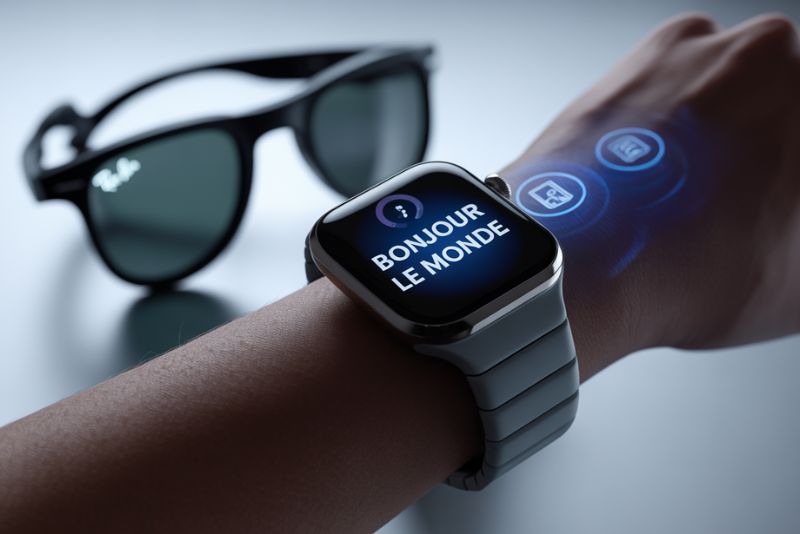
Unlike Apple or Samsung’s health-focused wearables, Meta’s device prioritizes environmental interaction. The dual-camera system, expected to retain the original 12MP + 5MP specifications, enables real-time object recognition, gesture control, and augmented reality overlays. This aligns with Meta’s broader wearable ecosystem: the watch will complement Ray-Ban smart glasses (with rumored Prada and Oakley collaborations incoming) and Quest VR headsets by serving as a control hub for immersive experiences.
Tech analyst Sarah Lin of TechInsights notes, “Meta isn’t just building a watch; they’re building a lens for the physical world. The cameras allow it to interpret surroundings, translate text, or even identify products and tasks that no mainstream smartwatch attempts.” This vision requires significant processing power, likely contributing to its reported 18-hour battery life, far shorter than fitness-focused rivals.
The Metaverse and AI Connection
Meta’s smartwatch revival coincides with its aggressive push into AI wearables. Earlier this year, CEO Mark Zuckerberg confirmed plans to launch “half a dozen” AI-driven devices in 2025. The watch’s cameras could feed visual data to on-device AI models, enabling features like contextual shopping or navigation overlays. Crucially, it may also enhance Meta’s metaverse ambitions by blending real-world visuals with virtual environments.
“This device is a bridge between Meta’s AI and its metaverse,” explains AR specialist Raj Patel. “Imagine pointing your wrist at a street and seeing digital directions projected through your Meta glasses. That’s the ecosystem play here”.
Market Challenges and Uncertainties
Despite renewed momentum, questions linger. Battery life remains a concern given the power-hungry cameras and AI processing. Pricing is also unclear, though analysts estimate a $300+ starting point. Crucially, Meta has yet to confirm if EMG-based controls, a breakthrough allowing nerve signals to trigger commands, will feature in this iteration. Previous attempts failed when cameras interfered with EMG sensors.
Meta’s history of hardware setbacks adds skepticism. Its Portal smart display and initial smartwatch efforts fizzled, and the company faces fierce competition in wearables. As Livemint observed, success hinges on proving that camera-centric functionality offers unique value beyond fitness tracking.
The Road to September
All eyes now turn to Meta Connect in mid-September. While DigiTimes reports suggest a possible unveiling, some sources caution that prototypes are still being tested, and a full launch might follow later. If showcased, Meta’s smartwatch could redefine wearables as tools for spatial computing, not just notifications. As wearable tech analyst Mark Rivera observes, “Meta is gambling that users want augmented reality on their wrists. If they’re right, it could justify the device’s compromises”.
Subscribe to my whatsapp channel

Comments are closed.