
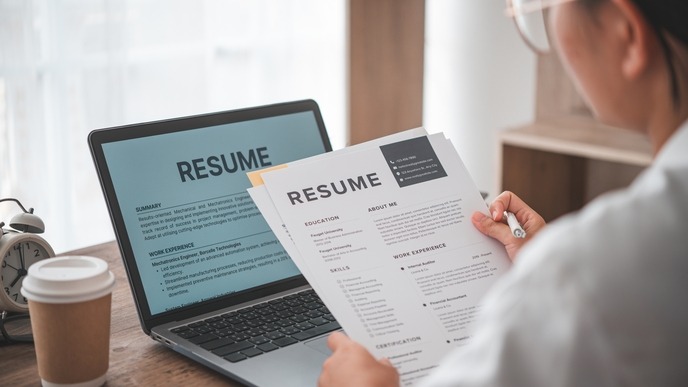
AI-Generated Job Applications Are Overwhelming BC Hiring Teams, Slowing Down the Search for Real Talent
HR professionals in British Columbia report heavier workloads and longer hiring timelines as they struggle to separate authentic candidates from a flood of AI-polished and sometimes fabricated resumes.

If you’ve felt like your job application disappeared into a void recently, you aren’t alone. In British Columbia, the hiring process has entered a strange new phase, one where artificial intelligence is creating more work for the people doing the hiring, and not necessarily better results for those looking for work.
For HR teams in Metro Vancouver, the morning inbox is no longer a stack of unique human stories. It’s a cascade of documents that all share the same impeccable grammar, the same confident cadence, and the same eerily perfect match to the job description. “We are seeing an influx of enhanced or embellished and even fabricated resumes coming through,” David Bolton, regional director for employment agency Robert Half’s Vancouver office, told the Richmond News. “It is becoming harder and harder to identify what a candidate’s actual experience is compared to what’s on a resume.”
The Perfect Resume Problem
This isn’t about a few typos. The issue is that AI tools have made it remarkably easy to generate a flawless resume. The problem is that “flawless” has become indistinguishable from “fake.” Giselle Blackman, a board member of the Chartered Professionals in Human Resources of B.C. and Yukon, notes that the traditional screening mechanisms simply don’t work anymore when a “significant number of resumes look perfect.”
Because the writing is so polished, hiring managers have to assume that the document is a potential work of fiction. This shift is placing a significant burden on HR departments. A recent survey of 1,500 Canadian hiring managers by Robert Half found that nearly nine in 10 HR managers (89 percent) are now experiencing heavier workloads specifically due to candidates using generative AI tools. The increased volume of applications and concerns about authenticity are creating notable challenges for roughly two thirds of organizations (64 percent).
Slowing Down to Speed Up
In an attempt to solve the problem of AI generated content, companies are being forced to slow down the hiring process significantly. Instead of quick phone screens, hiring teams are adding more validation steps. According to the Robert Half survey, 43 percent of managers now spend more time reviewing each application, and 42 percent have increased the number of interviews per candidate.
Blackman says her team at Fit Foods Ltd. used to spend about an hour on an interview. Now, they need at least 90 minutes to properly validate the claims made on a resume, often double checking past roles through their own professional networks. This extra legwork is also pushing more employers back toward in person interviews. “When you bring people into your office, you’re almost making it a bit of a clean room,” explains Mike Shekhtman, a Vancouver based senior regional director for Robert Half. “This is not an open book test.” In a world where AI can transcribe and answer virtual questions in real time, a face to face meeting is one of the few ways to be sure of who you’re talking to.
As the job market fills with this AI polished noise, experts say the most reliable path forward is surprisingly old school. Both Bolton and Blackman emphasize that a personal connection, a referral, or a well timed phone call is becoming the only sure way to stand out. The “human face” behind the application has never been more valuable.
Subscribe to my whatsapp channel
