
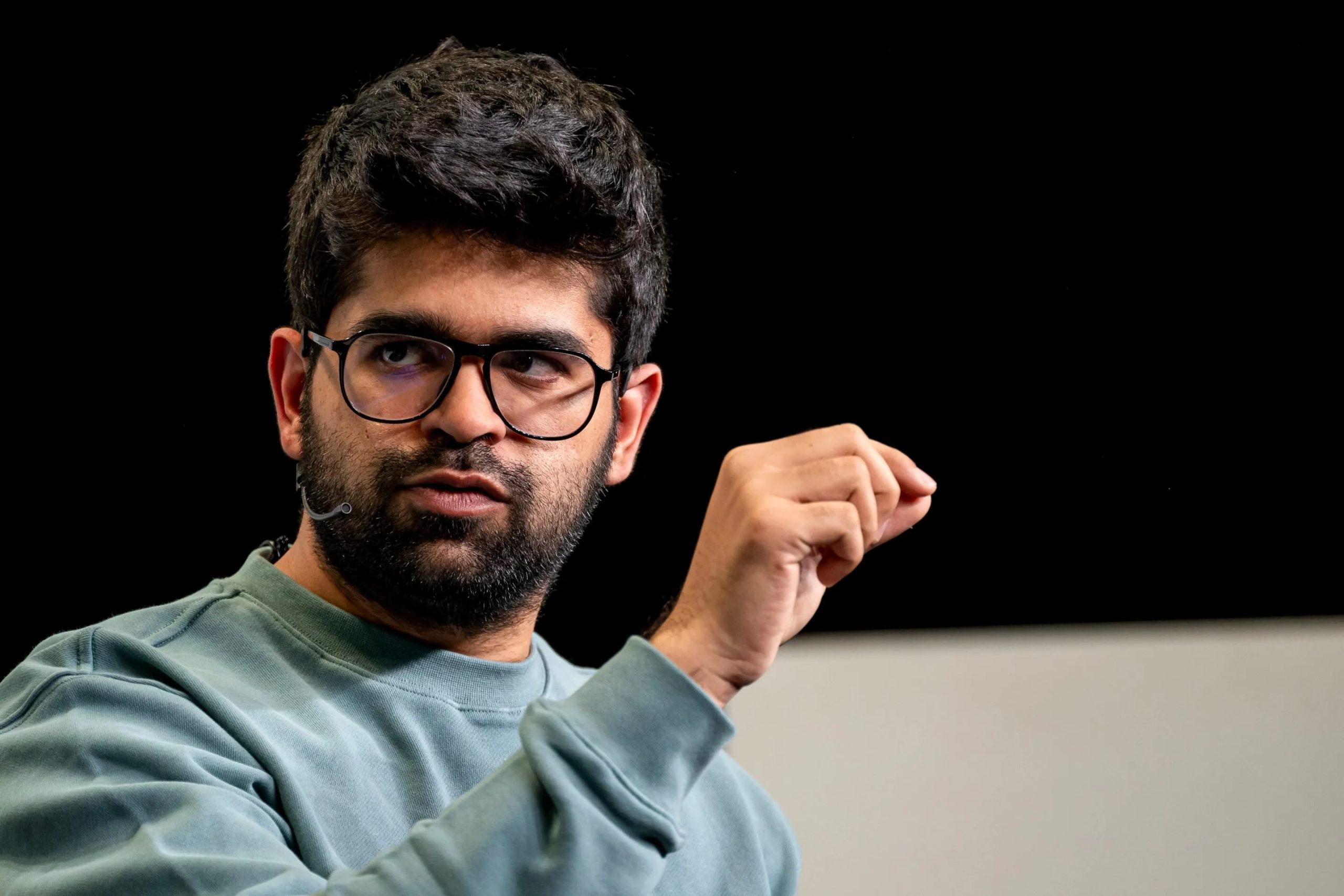

San Francisco—Aravind Srinivas, CEO of the $14 billion AI search startup Perplexity, delivered a stark warning to young entrepreneurs at Y Combinator’s AI Startup School this week: In today’s hypercompetitive AI landscape, large tech companies will rapidly replicate any successful innovation. “If your company can generate revenue in the hundreds of millions or even billions, you should always assume that a major player will try to copy it,” Srinivas cautioned.

His remarks reflect Perplexity’s journey since its December 2022 launch as an “answer engine.” The startup pioneered real-time web browsing for AI chatbots a feature later adopted by Google’s Bard (now Gemini), OpenAI’s ChatGPT, and Anthropic’s Claude within months. This pattern of innovation and imitation now defines the AI sector, where startups must navigate existential threats alongside unprecedented opportunities.
The Copycat Reality
Srinivas framed imitation as an inevitable marker of success but urged founders to leverage urgency as fuel. “You’ve got to live with that fear and embrace it. Your momentum comes from moving fast and building your own identity,” he advised. Perplexity’s rapid scaling informs his perspective to 780 million monthly queries and a reported $14 billion valuation, all while fending off rivals.
The competitive stakes are intensifying as AI lowers barriers to entrepreneurship. OpenAI CEO Sam Altman predicts the rise of “one-person billion-dollar companies,” while investor Mark Cuban foresees AI creating the world’s first trillionaire. Yet this democratization also invites exploitation. Recent months saw Google hire key talent from AI startup Windsurf, while Microsoft absorbed Inflection AI’s leadership team, trends Srinivas called “acquihires with independence illusions”.
Survival Strategies for Startups
To withstand pressure, Srinivas emphasized three countermeasures:
-
Speed and Originality: Startups must out-innovate giants by releasing features faster. Perplexity’s recent Comet browser—an AI agent that manages tasks across open tabs—exemplifies this. Srinivas believes its technical complexity buys temporary immunity: “A browser is harder to replicate than a chat tool”.
-
User-Centric Trust: Citing Perplexity’s citation-based answers, he stressed that transparency builds loyal user bases less likely to defect when rivals mimic functionality.
-
Relentless Execution: “Work incredibly hard. There is no substitute,” he stated, noting his grueling routine: “I wake up, I work, and even when I’m not working, I think about work”.
Broader Implications
The AI battlefield now extends beyond chatbots to integrated ecosystems. OpenAI is developing its browser, while Perplexity expands into shopping hubs and finance tools. For Srinivas, this signals a “shift from chatbots to agentic abstraction layers, where winning requires owning entire workflows.
Despite acquisition interest from Apple and others, he vows independence: “Our goal is to give an alternative to Google, Google Chrome, Google Search… We have to try, or nobody else will”. His defiance underscores a broader startup ethos: In AI, novelty is fleeting, but identity is defensible.
For emerging founders, Srinivas’s advice merges pragmatism with resilience. “Competition is real. Acknowledge it,” he said, “but focus on what big tech can’t replicate: your speed, voice, and mission”. As giants like Google and OpenAI face regulatory scrutiny and bureaucratic inertia, startups retain agility advantages if they move decisively.
The AI gold rush will inevitably produce imitators, but Srinivas believes authentic innovation still leaves room for newcomers. “The world needs little tech to win,” he asserted. “Big tech can keep making their products better, but disrupters can still thrive”. For entrepreneurs, that balance between paranoia and possibility may define the next era of AI.
Subscribe to my whatsapp channel

Comments are closed.