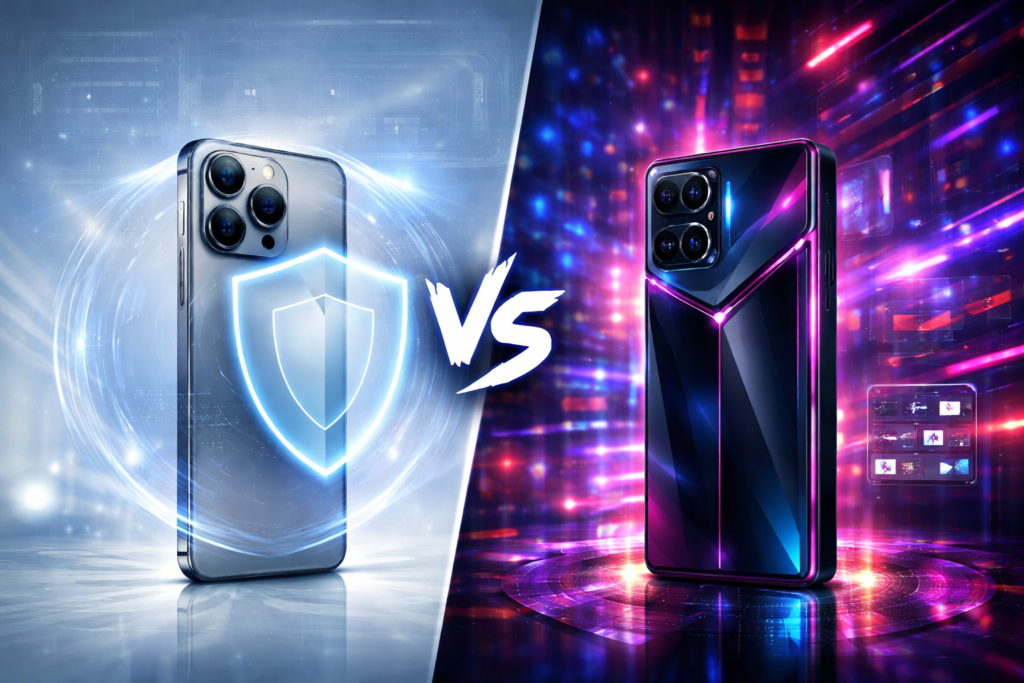
iPhone vs Android in 2026: The Truth About What Actually Matters
Both sides have loyal fans, but the real winner depends entirely on how you use your phone. Let‘s cut through the noise and look at what’s actually different in 2026.

For years the smartphone world has been split into two very loud and very passionate camps. But honestly, here in 2026, the conversation feels different. The hardware gap between a top tier iPhone and a flagship Android phone has basically evaporated. The real question isn’t which one is technically “better” on a spreadsheet. It’s about which one slides into your actual day to day life without annoying you.
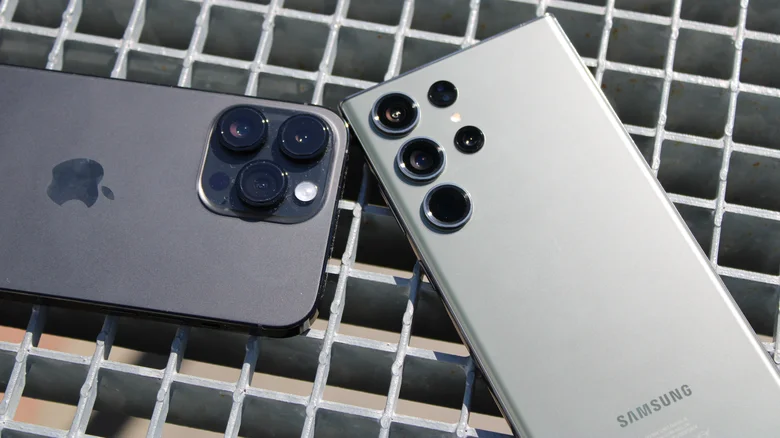
Let’s start with money because that’s where the biggest fork in the road still exists. Android’s whole thing is variety. You can walk into a store and grab a perfectly decent budget phone for a couple hundred bucks or you can pick up something like the OnePlus 15 for $899 with a ridiculously big 7,300mAh battery. On the flip side, Samsung’s S26 Ultra will set you back around $1,299 if you want the S Pen and that wild zoom lens. Android gives you a seat at the table no matter what your budget is.
The iPhone plays a totally different game. Apple doesn’t really do “budget” in the way Android does. The entry price is high. But here’s the thing people overlook: the long term math is actually pretty compelling. An iPhone 16 Pro Max from 2024 is still holding strong resale value right now in 2026. When you pair that with Apple’s almost ridiculous software support window, that $1,200 phone that lasts six or seven years might actually cost you less per year than a cheaper Android that gets dropped from the update cycle after three.
Performance wise, the old story has a new chapter. Apple’s A18 Pro chip is still an absolute beast at single core tasks. That means opening apps and just scrolling around feels buttery smooth in a way that hasn’t degraded a year later. Because Apple controls the whole widget, hardware and software, the experience just ages better. Now, high end Android phones running the Snapdragon 8 Elite have definitely closed the gap. If you’re rendering video or pushing heavy AI stuff, the Snapdragon can actually edge ahead in raw power. They also cram in more RAM. But here’s the catch: that raw power doesn’t always translate to that same long term polished feel. It’s a subtle difference, but you notice it after a couple of years.
The camera situation is less about good versus bad and more about philosophy. The iPhone is your reliable friend who tells you the truth. The 48MP Fusion camera gives you natural colors and skin tones that look like what you actually saw. You pull it out, you snap, and you know it’s fine. And if you shoot video, it’s still the gold standard. Android phones, especially the Galaxy S26 Ultra, are more like a creative toolkit. You get that crazy 200MP sensor and zoom that reaches way farther than anything on an iPhone. You also get more vibrant, ready to post shots right out of the gate. And you have options. A Pixel looks different from a Samsung, so you can actually find a look you personally love.
One area where Android has just left Apple in the dust is battery and charging. In 2026, those new Silicon Carbon batteries are letting Oppo and Xiaomi cram 7,500mAh into phones that aren’t even bricks. Two day battery life is just normal now. And with 80W to 100W charging, you can go from dead to full while you shower. The iPhone still tops out around 45W. The battery life on a Pro Max is fine thanks to Apple’s optimization, but it’s not in the same league. Apple seems more worried about keeping your battery healthy for four years than giving you a speed rush in twenty minutes.
Finally, there’s the vibe of actually using the thing. The iPhone is a walled garden, and for millions of us, that’s the whole selling point. It’s simple, it’s secure, and everything just talks to your Mac and Watch without a headache. The tradeoff is you play by Apple’s rules. Android is the open road. You can change the launcher, the icons, the whole look. You can sideload apps and run split screen windows like a tiny computer. The tradeoff there is sometimes you have to dig through a settings menu to make it all play nice.
So here’s the truth nobody wants to admit because it’s less fun than arguing online. In 2026, you can’t really make a bad choice here. Pick the iPhone if you want consistency, longevity, and that ecosystem glue. Pick Android if you want value, freedom, and a battery that refuses to quit. The best phone is just the one that fits quietly into your life without making you think about it.
Subscribe to my whatsapp channel
