
The Ferrari Luce EV: What Jony Ive’s Vision and 1,000 Silent Horsepower Mean in the Real World
This is not just a review of a new Ferrari. It's a look at whether the most anticipated electric car of the decade delivers a truly usable experience, or if its beautiful contradictions hold it back.

Ferrari has always understood ceremony and noise better than almost anyone. That’s what makes the arrival of its first fully electric vehicle feel so significant. The car is called “Luce,” the Italian word for light, and it represents much more than just another new model. It is Maranello’s half million dollar answer to a rapidly electrifying world and a very deliberate statement about what luxury and performance should feel like when there is no V12 screaming away just behind your head.
The Luce is a four seat grand tourer with over 1,000 horsepower coming from four separate electric motors. And its interior? That was shaped not by Ferrari’s in house team working in isolation but through a deep collaboration with LoveFrom, the design firm founded by Apple’s former design chief, Sir Jony Ive. That partnership alone means the Luce will be one of the most closely examined and hotly debated cars we see this decade. But once you get past the specs and the famous name attached to the cabin, the real question isn’t whether the Luce is fast or good looking. It’s whether the thing makes any sense as an actual car you would use.
The Interior Philosophy: A Rebellion Wrapped in Anodized Aluminum
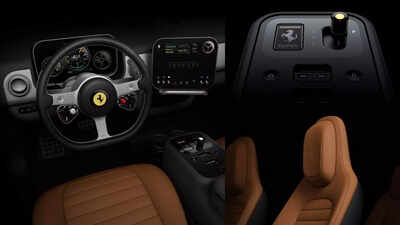
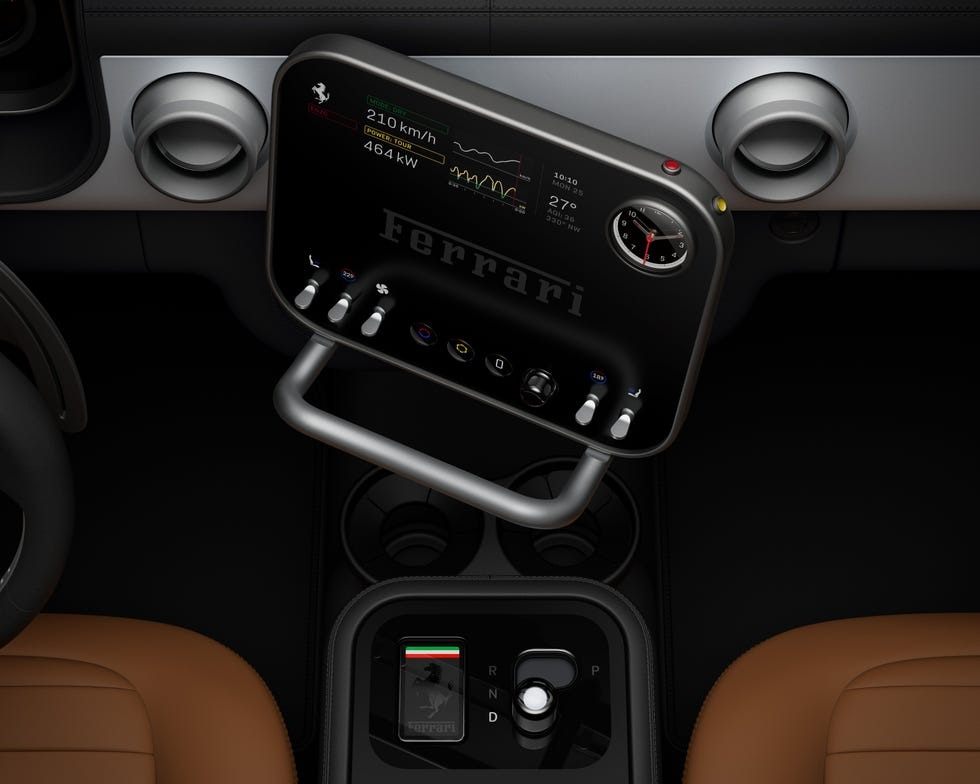
Without a doubt, the most talked about element of the Luce is its cabin, and for very good reason. We live in a time where “modern” car interiors almost always mean a single enormous tablet glued to the dashboard, running everything from your maps to the angle of your air vents. The Luce’s interior feels like a deliberate and very expensive rebellion against that whole idea. This is a space dominated not by glossy screens but by actual physical buttons, wonderfully clicky switches, and dials machined from beautiful chunks of aluminum. The man who once convinced the world that a slab of glass could replace a keyboard has now helped create a car interior that argues passionately for the simple joy of touching and turning things. Ive’s team at LoveFrom spent five years refining every dimension of this design, and the result is a cabin that prioritizes function and ritual over passing trends.
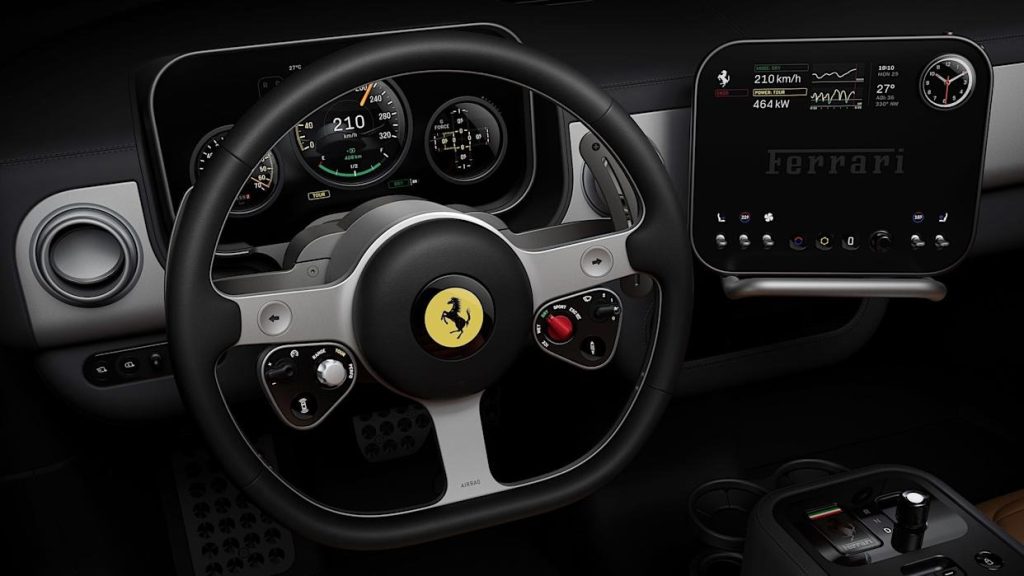
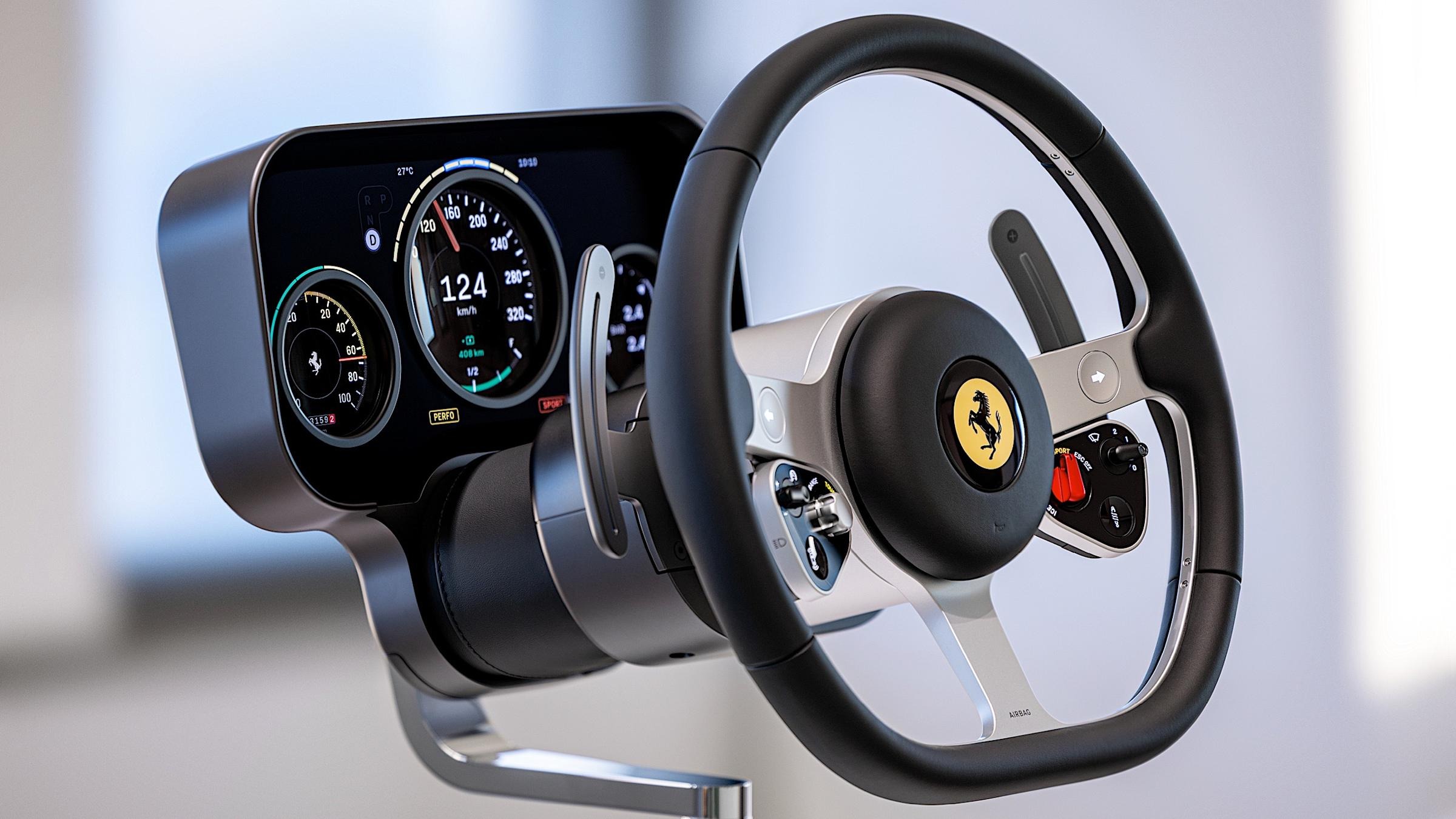
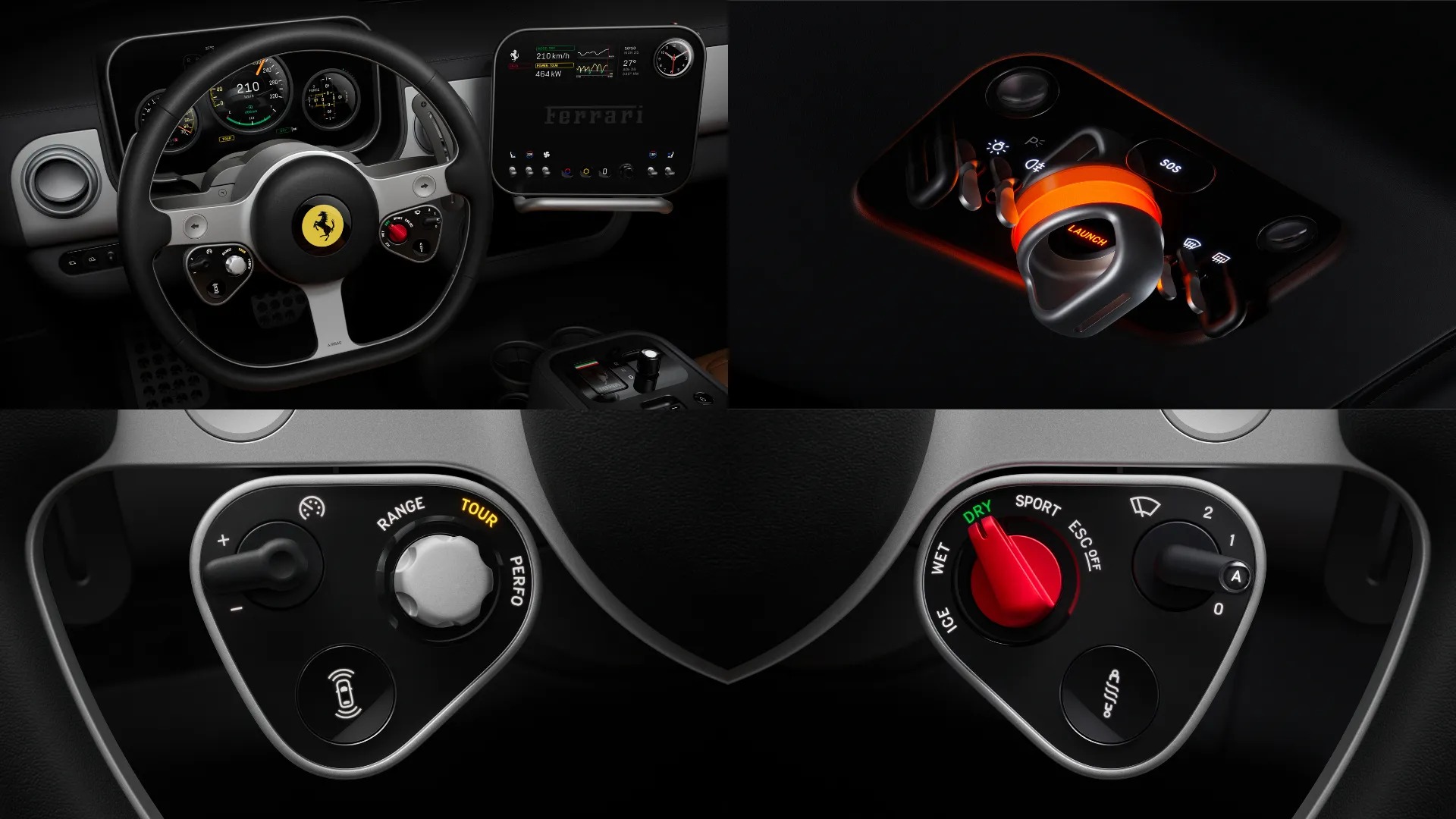
From a practical standpoint, this approach has some clear benefits. You can adjust the climate control or change the volume with a physical knob entirely by feel, never once glancing away from the road ahead. There is a central infotainment screen and it can even pivot on a ball joint toward the driver or passenger, but it never demands all the attention. The steering wheel is a piece of art in its own right, a modern take on the classic Nardi wheels from the fifties and sixties. It’s machined from recycled aluminum and is about 400 grams lighter than a typical Ferrari wheel, and it places the important Manettino drive mode selector and other essential controls exactly where your thumbs can find them. Even the key is meant to be a talking point, a piece of glass with an E Ink display that shifts color when you slot it into the center console and triggers a pre drive light show that replaces the old drama of twisting a physical ignition key. The materials lean heavily toward anodized aluminum and strengthened glass instead of the usual plastics and Alcantara, giving the whole space a kind of modern, jewelry like precision that feels closer to a high end audio component than a standard car interior.
Performance: The Numbers Are Predictably Staggering
Since this is still a Ferrari, the performance figures almost feel like an afterthought, but they are essential context. The Luce uses four independent electric motors, one for each wheel, for a combined output that exceeds 1,000 horsepower in Boost mode. Ferrari claims a zero to 62 miles per hour time of just 2.5 seconds and a top speed of 193 miles per hour. Those numbers place it right alongside the quickest production electric vehicles on the market, including the Lucid Air Sapphire.
But performance in an electric car is about more than just a party trick off the line. The Luce’s quad motor setup allows for incredibly sophisticated torque vectoring, which means power can be sent independently to whichever wheel needs it most to maximize grip and agility through a corner. Combined with active suspension and rear wheel steering, the promise here is that the Luce will handle like a proper Ferrari and not some heavy, one dimensional electric barge. Ferrari’s engineers even consulted with NASA to help tune the acceleration curve, aiming to make sure the experience feels emotional and engaging rather than just coldly clinical. The battery is a 122 kilowatt hour unit integrated low into the floor to keep the center of gravity as low as possible, which is a crucial piece of the puzzle when you consider the car’s expected curb weight of around 2,300 kilograms or roughly 5,000 pounds.
Range, Charging, and the Practicality Compromise
This is the part of the conversation where things get a bit more complicated for real world use. Ferrari states the Luce will have a WLTP range of over 330 miles, which is roughly 530 kilometers. It’s important to remember that the WLTP cycle is a bit more generous than the EPA standard we typically see in the United States. In everyday driving, especially if you actually use any of that 1,000 horsepower, you should realistically expect something closer to 280 miles of range. That figure is still perfectly fine for a grand tourer and certainly enough for most daily commutes or a fun drive through winding back roads.
What might prove more limiting is the charging network itself. The Luce supports up to 350 kilowatt fast charging, which can add a few hundred miles of range in around fifteen to twenty minutes. But the network of reliable, high power chargers simply isn’t as widespread or dependable as something like Tesla’s Supercharger network in many parts of the world. Road tripping in a Lucid Air or a Porsche Taycan today still requires a bit of planning and a dose of patience, and doing it in a Ferrari Luce will be no different. Additionally, the car is a four door, four seat grand tourer with a wheelbase comparable to the Purosangue SUV, so it should offer a reasonable amount of space for four adults. That said, rear headroom and legroom in such a sleek and low profile design remain open questions until we see one in person. This is not a cramped mid engine supercar, but it is also not a boxy, practical family hauler.
The Other Side of the Badge: What You’re Giving Up
The Luce is an answer to a big question, but it also raises a few difficult ones of its own. The most obvious is the loss of the very thing that defined Ferrari for over seventy five years: the internal combustion engine. The sound, the vibration, that visceral link between a screaming V12 and your right foot, all of it is gone. Ferrari is promising an amplified sound generated from drivetrain pickups, but it will be an artificial and synthesised experience, not a mechanical symphony. For some buyers, this will be an absolute dealbreaker. For others, it might feel like a welcome step into a quieter and more serene kind of high performance.
Then there is the price. Estimates place the Luce solidly in the $500,000 to $600,000 range, which makes it significantly more expensive than a Porsche Taycan Turbo GT or even a Lucid Air Sapphire. You are paying a massive premium for the Ferrari badge, the exclusive Jony Ive designed interior, and the promise of a driving experience that no other electric vehicle can match. But value becomes a slippery concept at this level. If you can afford the entry fee, the real question is whether the Luce offers an experience that feels worth the extra cost over its very capable rivals.
Finally, there is the long term unknown of reliability. This is Ferrari’s very first foray into a fully electric vehicle, complete with a complex quad motor system, a bespoke battery pack, and a whole new layer of software. While Ferrari’s engineering reputation is strong, the teething issues that tend to accompany any new and complex EV platform are a genuine possibility.
A Beautiful Contradiction Worth Considering (For a Very Specific Few)
The Ferrari Luce is not a car you buy because it is the most practical or the most logical choice on the spreadsheet. You buy it because you want the most interesting electric grand tourer on the market and you are willing to pay a royal ransom for an interior that feels like a piece of modern art and a driving experience that tries to prove electric cars can have a soul.
This car is a beautiful contradiction. It is a silent Ferrari. It is a half million dollar daily driver. It is a piece of technology designed by a man famous for touchscreens that actively chooses to reject them. For the vast majority of people looking at it, the Luce is a fascinating and wildly expensive curiosity. But for a wealthy enthusiast who wants to stand apart from the Tesla and Porsche crowd and who genuinely values craftsmanship and tactile interaction above all else, the Luce is a compelling and albeit imperfect glimpse into the future of the supercar. It won’t be for everyone, and frankly it wasn’t designed to be. But for the few who understand it and can afford its particular blend of artistry and performance, it might just be exactly right.
Subscribe to my whatsapp channel
