
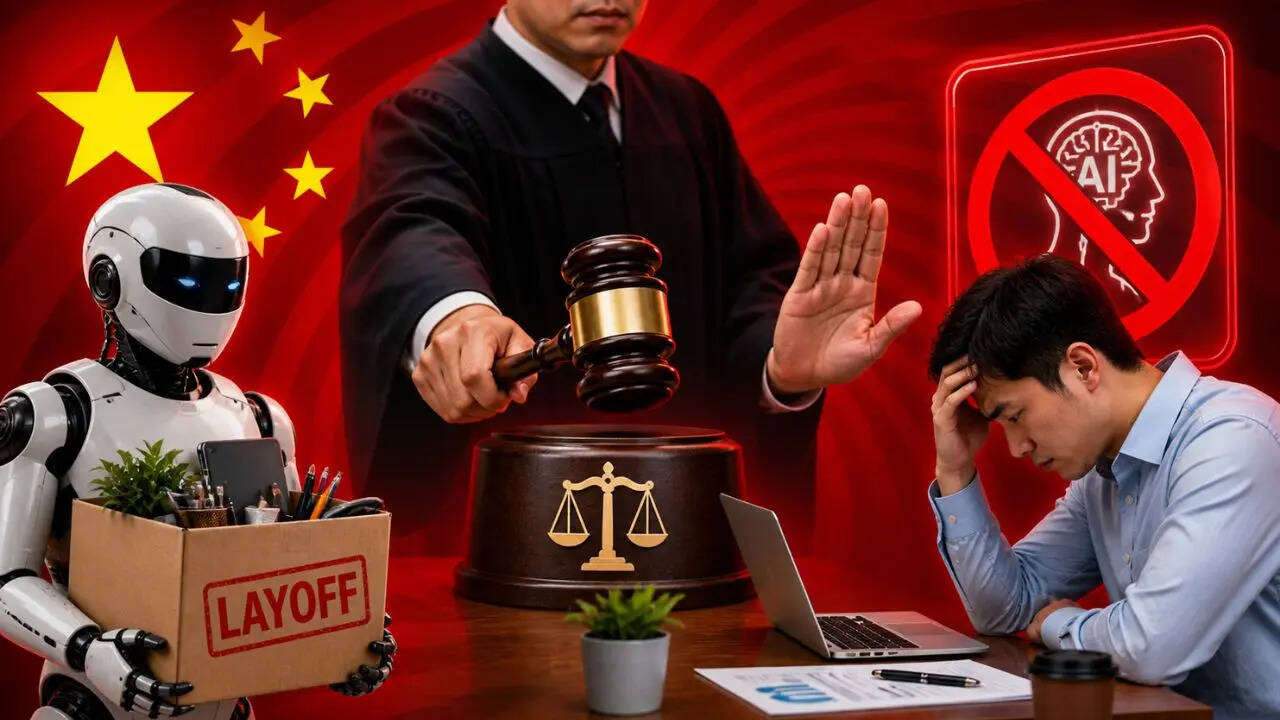

Faster savings through artificial intelligence have stumbled into court trouble across China. Not expected, but lawsuits now slow down what once sped up.
Across China, judges have said firms mustn’t fire staff just to swap them out for machines powered by algorithms. This ruling emerges while bosses everywhere wrestle with how quickly human tasks can be handed over to software instead.
Back in spring 2026, decisions emerged from Hangzhou’s Intermediate People’s Court alongside labor reviews in Beijing. Not every court sees it the same way, yet these cases suggest a pattern. Using artificial intelligence might suit company goals. Still, that shift alone won’t justify laying off workers when current laws apply.
What sets them apart counts a lot, even if it seems small at first glance.
Some boundaries exist beyond which businesses simply do not go
It seems a few companies attempted to explain job cuts by saying the rise of AI brought big shifts in real-world conditions – phrasing linked to China’s labor rules. Workers out because systems changed, they claimed, pointing to legal terms about external factors altering work needs.
One reason this debate matters shows up when workers challenge job changes. When conditions shift a lot, firms sometimes get leeway to adjust their operations. Yet recent decisions hint that judges won’t see self-driven tech shifts as equal to sudden market crashes or forces beyond control.
Simply put: picking a tool differs from reacting to chaos.
Decisions made so far leave room for companies to keep using artificial intelligence tools, automated processes, or software meant to boost productivity. Deployment remains allowed across workplaces. Yet a boundary shows up when job cuts rely only on money saved by AI – this approach now faces limits.
This shifts how we talk about it
Years passed with people talking mostly about what artificial intelligence could actually achieve. Lately, the spotlight shifted – now it’s about which moves businesses get to make using that tech.
Surprisingly, China holds weight not just as a top job provider but also as an AI speedster. Should its judges start reining in firings powered by algorithms, leaders around the globe might pay attention – quietly.
Right now feels different somehow. Some companies push machines to cut costs fast. Yet rules that guard workers tend to trail behind, then snap into place hard when they arrive. Feels like we’re at that point again.
One thing stands out for bosses – swapping workers fast might spark arguments, hurt team spirit, yet bring attention from officials watching the rules.
Where this leaves workers
Change at work won’t halt just because of these decisions. Even so, positions keep changing, while certain roles fade due to reorganization or new market needs.
Yet workers might gain some power here: avoiding sudden layoffs just because machines cost less.
It offers less coverage than many expect – still, it holds weight.
What stands out keeps shifting into view. Machines might change how tasks get done, yet old guidelines built around people still hold ground. Over there in China, at this point anyway, judges say speed can’t override everything.
Subscribe to my whatsapp channel
