


Meta Platforms stunned Wall Street Wednesday, reporting second-quarter results that demolished analyst expectations, triggering a 12% stock surge in after-hours trading. The social media giant posted revenue of $47.52 billion, eclipsing forecasts of $44.8 billion, while earnings per share hit $7.14, far above the $5.92 consensus 15. Year-over-year revenue growth hit 22%, matching Q2 2024’s robust pace despite the company’s escalating investments in artificial intelligence infrastructure.
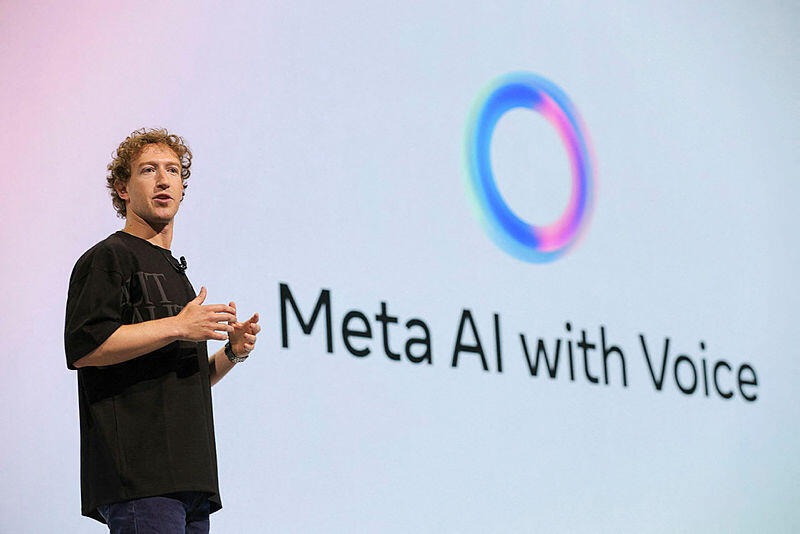
Earnings Triumph Anchored in AI and Ads
The company’s advertising engine delivered standout performance, generating $46.56 billion in a 21.5% annual jump 10. CEO Mark Zuckerberg attributed this to AI-driven efficiency gains, noting upgrades to Meta’s recommendation systems boosted Instagram ad conversions by 5% and Facebook’s by 3%. User engagement also climbed, with daily active people across Meta’s app family (Facebook, Instagram, WhatsApp, Messenger) reaching 3.48 billion, up 6% year-over-year.
“We’ve begun to see glimpses of our AI systems improving themselves,” Zuckerberg told analysts, emphasizing that developing “superintelligence” AI surpassing human cognitive abilities is now “in sight”. His vision centers on “personal superintelligence” that empowers users rather than automating work centrally, a philosophical contrast to some rivals.
Cash Position and Spending Surge
Despite booming profits, Meta’s balance sheet reveals aggressive spending. Cash and marketable securities plummeted to $47.07 billion by June 30, down sharply from $70.23 billion at March’s close,se a $32 billion reduction in six months. This cash burn stems from monumental investments in AI infrastructure, including a $14.3 billion stake in data-annotation startup Scale AI and the recruitment of its CEO, Alexandr Wang, to co-lead Meta’s newly formed Superintelligence Labs.
Capital expenditures hit $17.01 billion in Q2 alone, with full-year guidance narrowed to $66–$72 billion. CFO Susan Li confirmed 2026 would see “similarly significant” spending growth as Meta builds multi-gigawatt data centers like the “Prometheus” and “Hyperion” clusters to power its AI ambitions.
“The largest driver of expense growth will be infrastructure costs, driven by a sharp acceleration in depreciation,” Li stated, adding that hiring technical talent remains the second-largest cost priority. Reality Labs, Meta’s metaverse division, continued its money-losing streak with a $4.53 billion operating loss.
Balancing Profitability and Future Bets
For now, profitability remains robust: operating income surged 38% to $20.44 billion, lifting operating margins to 43% 910. Q3 revenue guidance of $47.5–$50.5 billion also topped estimates. Yet analysts note the scale of Meta’s spending introduces risk. BofA’s Justin Post acknowledged Meta as “one of the best AI opportunity stocks” but highlighted dependence on monetizing these investments long-term.
Baird tech strategist Ted Mortonson observes the tension: “Meta’s ad business is funding an unprecedented AI arms race. The cash burn reflects Zuckerberg’s conviction that leading in superintelligence requires outspending rivals today, but investors will demand tangible returns by 2026.”
Regulatory hurdles also loom, particularly in Europe, where Meta warned that ongoing Digital Markets Act compliance discussions could “significantly impact” revenue. Still, with 10 consecutive quarters of profit beats and AI already boosting core engagement and ad sales, Meta’s gamble appears calculated. As Zuckerberg declared, “We tell people: Take superintelligence seriously”.
Subscribe to my whatsapp channel

Comments are closed.