
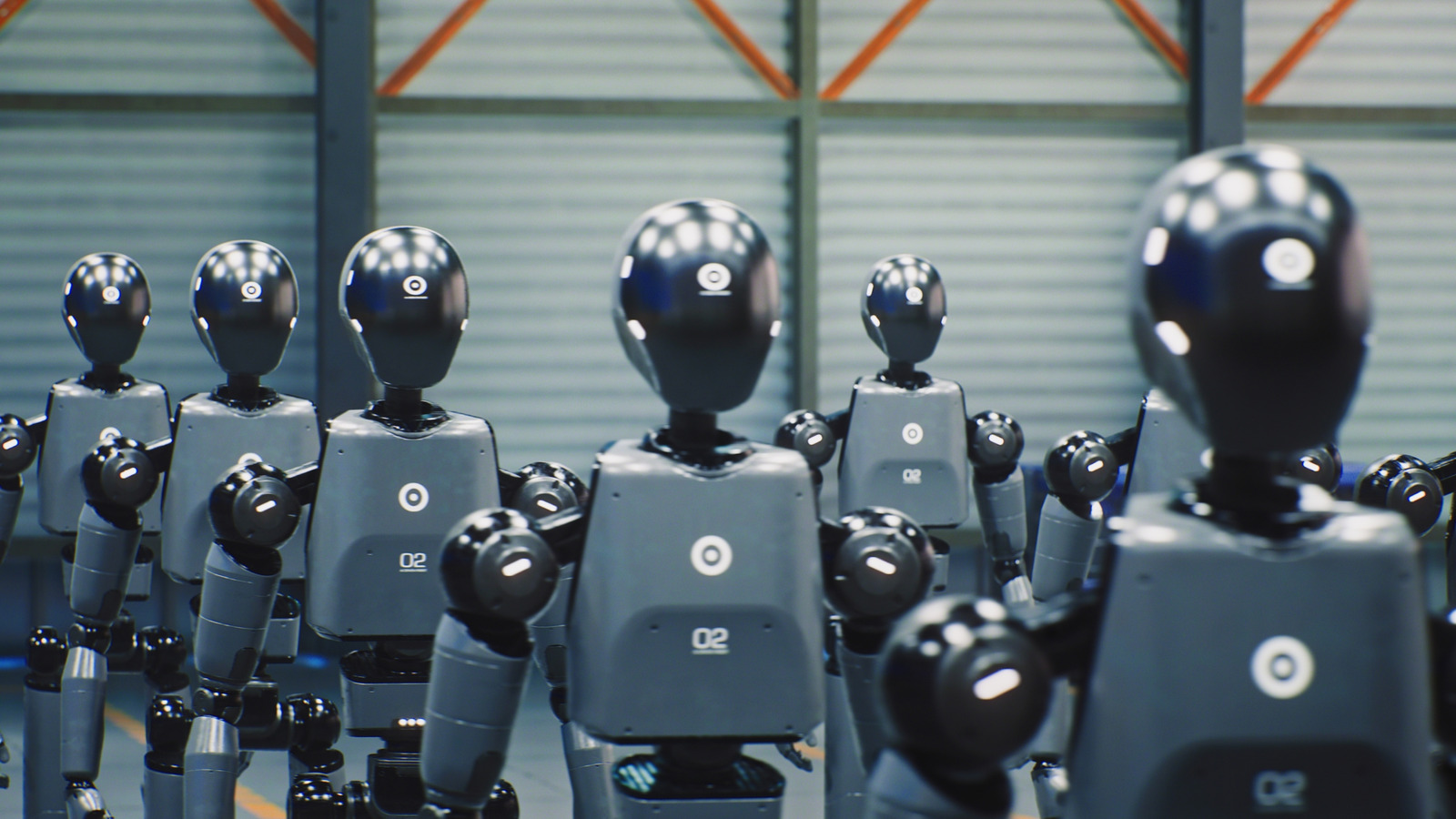

The deal didn’t come with the usual fanfare. No flashy product demo, no keynote stage moment. Just a quiet acquisition that says more about where Meta is trying to go than where it currently is.
Meta has acquired Assured Robot Intelligence (ARI), a startup working on robotic intelligence systems designed to help machines understand and adapt to human behavior. The entire team is now joining Meta’s Superintelligence Labs, feeding directly into its broader push into advanced AI and humanoid robotics.
It’s a small acquisition on paper. But the direction it points to is anything but small.
A startup built for human-like machines
ARI wasn’t building robots in the traditional sense. Instead, it focused on the “brain” side of robotics—models that allow machines to interpret physical environments and respond in ways that resemble human decision-making.
That matters because robotics has long struggled with a simple problem: real-world unpredictability. Teaching machines to move is one thing. Teaching them to adapt when things don’t go as planned is another.
The startup’s co-founders, Xiaolong Wang and Lerrel Pinto, bring research backgrounds from Nvidia and UC San Diego, both known for deep work in machine learning and robotics systems. That academic-to-industry pipeline is exactly the kind of expertise big tech companies are now aggressively collecting.
Why Meta is moving in this direction
Meta has mostly been known for its social platforms and, more recently, its aggressive AI expansion. But robotics adds a different layer entirely.
Unlike chatbots or image models, robots require grounding in the physical world. They need to “see,” interpret, and react in real time. That’s a harder problem—and a longer game.
By folding ARI into Superintelligence Labs, Meta is effectively betting that the next frontier of AI won’t stay on screens. It will move into physical machines.
Big ambition, unclear payoff
Still, the robotics industry is far from settled. Projections for humanoid robotics range wildly, and even within Silicon Valley there’s no consensus on how quickly—or even whether—it will scale into a major market.
That uncertainty hasn’t slowed investment. If anything, it’s accelerating it.
Meta’s move suggests it doesn’t want to be late if robotics does take off. But it also raises a quieter question: how much of this is long-term vision, and how much is a high-risk bet on an industry still trying to prove itself?
For now, the only clear outcome is this—Meta is no longer just building software intelligence. It’s trying to give it a body.
Subscribe to my whatsapp channel
